

28.8% of Americans 65+ have diabetes — the highest rate of any age group. Another 52% have prediabetes. The 2026 ADA guidelines, GLP-1 medications, and continuous glucose monitors have transformed care. Here's how to actually manage Type 2 diabetes in retirement.
If you're retired and managing Type 2 diabetes, you're not alone — and the toolkit available to you in 2026 is dramatically better than it was even five years ago.
According to the CDC's National Diabetes Statistics Report, 28.8% of Americans 65 and older have diabetes — the highest of any age group. Another 52.1% have prediabetes. That's roughly 4 out of 5 retirement-age Americans living with abnormal blood sugar.
What's changed is how we treat it. GLP-1 medications. Continuous glucose monitors. Updated A1C targets that recognize "good control" looks different at 75 than at 35. And — at least in our practice — visits long enough to actually manage all of it.
Here's a practical guide for retirement-age patients (and family members of patients) with Type 2 diabetes.

Key Takeaways
- 28.8% of Americans 65+ have diabetes; another 52.1% have prediabetes (CDC, 2024)
- 2026 ADA guidelines individualize A1C targets: under 7.0-7.5% for healthy older adults, under 8.0% for those with multiple chronic conditions, and avoid hypoglycemia rather than chase A1C in very complex patients (ADA Standards of Care 2026)
- GLP-1 medications like semaglutide produced 15.2% mean weight loss and reduced cardiovascular events in the SELECT trial (NEJM)
- The Diabetes Prevention Program's lifestyle intervention reduced diabetes risk by 58% — and the benefit persists 22 years later (ADA, 2024)
Why Diabetes Is Different After 65
The basic biology is the same. Insulin resistance, beta-cell decline, blood sugar that doesn't get pulled into cells efficiently. What changes after 65 isn't the disease — it's the patient context.
Older adults are more likely to be on medications that interact with diabetes drugs. They're more likely to have kidney disease, heart disease, or both alongside diabetes. They're more vulnerable to hypoglycemia, with less of the early warning signs (the sweating, shakiness, and tremor) that protect younger patients. And they have a much higher cost from a single bad event — a fall after a hypoglycemic episode can put a 75-year-old in a nursing home.

That's why the 2026 American Diabetes Association Standards of Care dedicate an entire chapter to older adults. The headline: tighter isn't always better.
What's My A1C Target Now?
The single most useful thing the 2026 ADA guidelines did was acknowledge that A1C targets should be individualized, not one-size-fits-all. The framework breaks older adults into three rough tiers:
- Healthy older adults (few chronic conditions, intact cognitive and functional status): A1C target under 7.0-7.5%, similar to younger adults.
- Complex/intermediate health (multiple chronic conditions, mild-to-moderate cognitive impairment, two or more functional limitations): A1C target under 8.0%. Tighter control isn't worth the hypoglycemia risk.
- Very complex/poor health (advanced chronic conditions, severe cognitive impairment, significant functional impairment, end-of-life care): The goal becomes avoiding hypoglycemia and symptomatic hyperglycemia — not chasing an A1C number.
The 2025 ADA Standards added something else important: Time-in-Range and Time-Below-Range as legitimate metrics alongside A1C. With CGMs (more on this below), we can actually see what your blood sugar is doing all day — not just an average. For older patients especially, time below range matters more than the headline A1C.
GLP-1 Medications — The Biggest Change in 30 Years
Semaglutide (Ozempic, Wegovy, Rybelsus) and tirzepatide (Mounjaro, Zepbound) have changed diabetes care more than any class of medication since metformin. They lower A1C, drive significant weight loss, and — critically — reduce cardiovascular events in patients with established disease.
The SELECT trial in NEJM tested semaglutide 2.4 mg in adults 45+ with cardiovascular disease and overweight/obesity (without diabetes). Results: 15.2% mean weight loss and a meaningful reduction in major adverse cardiovascular events at 3 years. The SURMOUNT-1 trial on tirzepatide showed 16.0-22.5% mean weight loss across doses, with 50-57% of participants on the higher doses achieving weight loss of 20% or more.
For older patients, the conversation is more nuanced. The benefits are real — better glycemic control, weight loss, cardiovascular protection. The cautions:
- Slower titration in older adults to manage GI side effects.
- Watch for unintentional weight loss, especially in patients who are already lean.
- Sarcopenia (muscle loss) risk needs paired strength training.
- Cost. Some patients can access these through Medicare Part D plans, though coverage and cost-sharing vary widely. We always check.
The 2026 ADA guidelines explicitly endorse GLP-1 receptor agonists and dual agonists for older adults with appropriate monitoring — they're no longer reserved for younger patients.
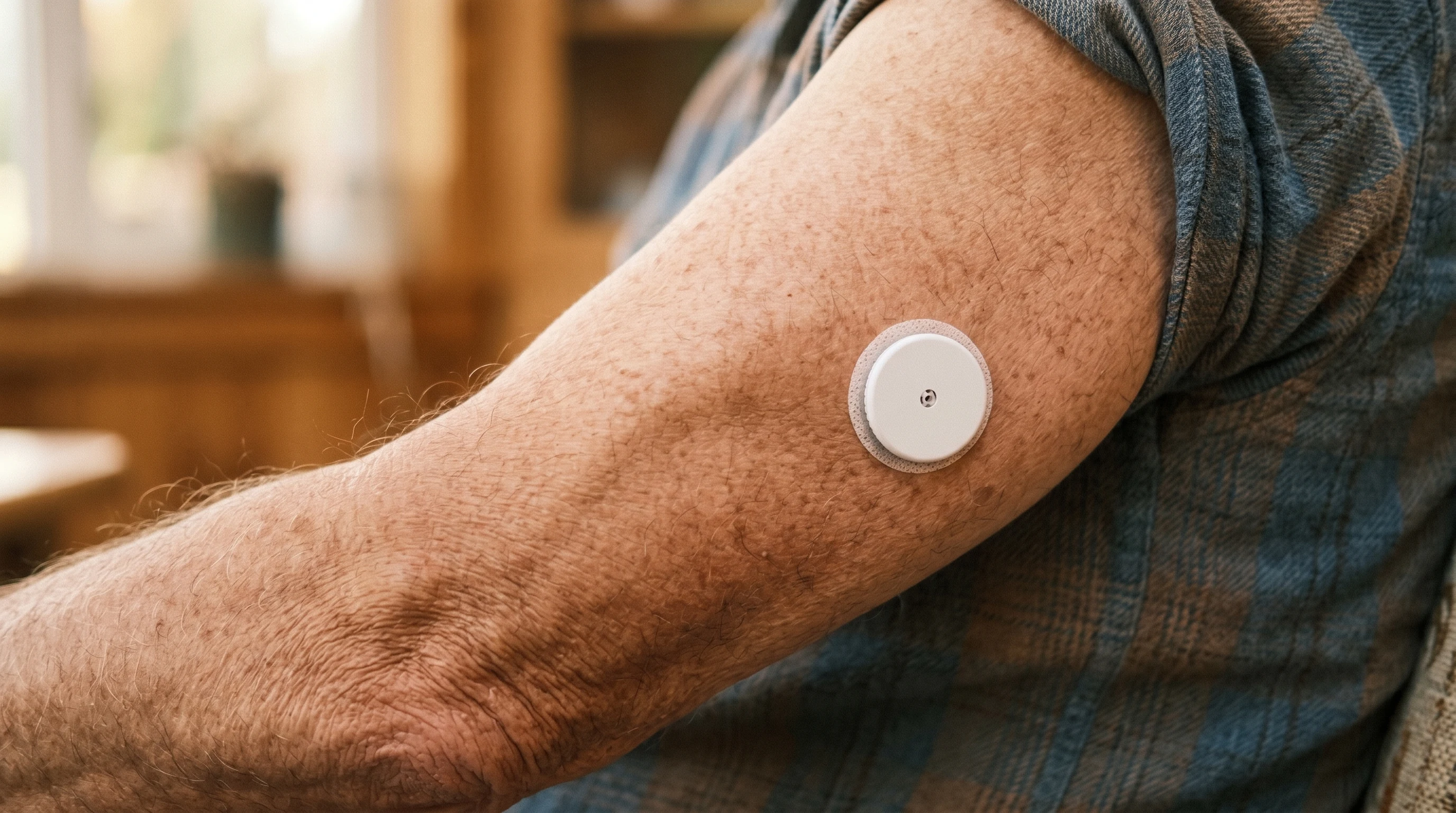
Continuous Glucose Monitors — Worth Asking About
A continuous glucose monitor (CGM) is a small sensor worn on the back of the upper arm or abdomen that measures glucose every few minutes for 10-14 days. The data goes to your phone or a reader. Two big things changed recently: Medicare expanded coverage in 2023 to include essentially anyone using insulin and even non-insulin patients with problematic hypoglycemia; and the technology improved enough that the sensors are accurate, comfortable, and easy to use (Medicare CGM coverage).
Why it matters for older adults specifically:
- Hypoglycemia detection. Older adults often miss the early warning signs of low blood sugar. CGMs alert before a true low becomes dangerous.
- Real-world feedback. Patients see which meals spike them, how exercise lowers them, what poor sleep does to their numbers. That feedback loop changes behavior more reliably than a quarterly A1C.
- A1C reduction. Per AAFP coverage of CGM clinical evidence, CGM use is associated with reduced A1C even without other interventions.
Lifestyle: Still the Foundation
Medications get the headlines. Lifestyle still does the heavy lifting — and the data on lifestyle intervention in older adults is among the strongest in medicine.
The Diabetes Prevention Program (DPP), an NIH-funded landmark trial, found that a structured lifestyle intervention — 5-7% body weight loss plus 150 minutes of weekly activity — reduced incidence of Type 2 diabetes by 58% in adults at high risk. Metformin reduced incidence by 31%. Lifestyle outperformed medication.
What's remarkable is the durability. The DPP Outcomes Study reported in 2024 that 22 years out, the lifestyle intervention group still showed a 25% lower diabetes incidence — and participants who avoided diabetes had 57% lower eye disease risk, 37% lower kidney disease, and 39% lower cardiovascular events compared to those who developed diabetes.
For diet specifically, both Mediterranean and lower-carbohydrate approaches have peer-reviewed support. A 2024 meta-analysis in Nutrients confirmed that the Mediterranean diet significantly reduces HbA1c versus control diets. Pick the pattern you can maintain — adherence matters more than perfection.
Other lifestyle factors that show up in our visits:
- Sleep. A Columbia study found that just 90 minutes of sleep restriction over 6 weeks increased insulin resistance, with effects more pronounced in postmenopausal women. Sleep is metabolic medicine.
- Strength training. Two to three sessions per week protects muscle mass, supports glucose disposal, and reduces fall risk. Especially important on GLP-1 medications.
- Stress management. Cortisol drives blood sugar up. The mechanisms aren't mysterious — and walking, sleep, social connection, and meditation all measurably lower it.
What About Hypoglycemia?
This is where I worry most about older patients. Severe hypoglycemia (low blood sugar requiring assistance to treat) is associated with higher mortality, increased dementia risk, falls, fractures, and hospitalization. Hospitalization rates for hypoglycemia in Medicare patients 75+ are roughly twice the rate in patients 65-74 (Diabetes Care).
Things that increase hypoglycemia risk in older adults:
- Sulfonylureas (glipizide, glyburide) — increasingly avoided in this population.
- Long-acting insulins without proper titration.
- Tight A1C goals (under 6.5%) in patients who shouldn't be there.
- Skipped meals, alcohol, kidney function decline.
If you've had even one episode of true hypoglycemia, that's a reason to revisit your medication plan. "Tighter" isn't "better" if it's putting you on the floor.
Diabetes Complications — What to Screen For
The major long-term complications of diabetes are eye disease, kidney disease, neuropathy, and cardiovascular disease. Per peer-reviewed NHANES analysis, diabetic kidney disease affects 30-50% of T2D patients, and diabetic retinopathy prevalence runs around 27.8% in adults 40+ with diabetes. The good news: each of these has a screening pathway with proven benefit when caught early.
Routine yearly checks for our diabetic members include:
- Annual dilated eye exam (we coordinate the referral).
- Urine albumin-to-creatinine ratio + eGFR for kidney function.
- Foot exam at every visit; dedicated comprehensive foot exam yearly.
- Lipid panel and blood pressure assessment.
- A1C every 3 months until stable, then every 6 months.
- Discussion of CV risk and whether GLP-1, SGLT2, or statin therapy is indicated.
Why DPC Changes Diabetes Management
I'll be direct here. Type 2 diabetes is one of the conditions most poorly managed in traditional fee-for-service primary care, and the reason is structural. Peer-reviewed analysis found that primary care residents spent an average of 5 minutes specifically on diabetes within typical 13-16 minute visits — A1C was addressed in only 40% of visits, feet examined in 40%, therapy intensified in only 15% even with mean A1C of 8.9%.
That isn't a critique of the doctors. It's the inevitable result of a model that pays for codes instead of outcomes.
In Direct Primary Care, my visits with diabetic members are 30-60 minutes when needed. We can review CGM data, talk through medication trade-offs, do the foot exam properly, and order labs that don't get a copay. Same-day access means we can adjust insulin in real time when something isn't working — not three months later at the next scheduled visit.
The total annual cost of diabetes in the U.S. hit $412.9 billion in 2022 (Diabetes Care). The fixed cost of doing it right — comprehensive primary care with time built in — is a small fraction of what poorly managed diabetes costs anyone.
Where to Start
If you have Type 2 diabetes or prediabetes and feel like your current care isn't comprehensive enough, here's what I'd recommend asking at your next visit:
- What is my individualized A1C target, and why?
- Am I a candidate for a GLP-1 medication?
- Should I be using a continuous glucose monitor?
- When was my last dilated eye exam, kidney function check, and foot exam?
- Are any of my medications increasing my hypoglycemia risk?
If you'd like to have those conversations with us, you can enroll as a member, learn more about our DPC model, or simply call 928-515-2803. Diabetes management isn't a series of 7-minute checkups. It's a relationship, and we have time for that.
Frequently Asked Questions
What's a good A1C target for someone over 65?
It depends on your overall health. The 2026 ADA Standards of Care recommend: under 7.0-7.5% for healthy older adults with few chronic conditions; under 8.0% for those with multiple chronic conditions or mild-to-moderate cognitive impairment; and avoiding hypoglycemia rather than chasing an A1C number for very complex or end-of-life patients. Tighter isn't always better — severe hypoglycemia in older adults is associated with falls, fractures, dementia risk, and increased mortality.
Are GLP-1 medications like Ozempic safe for seniors?
Yes, with appropriate monitoring. The 2026 ADA guidelines explicitly endorse GLP-1 receptor agonists for older adults. The benefits are significant — A1C reduction, 15-22% weight loss in major trials, and cardiovascular event reduction in the SELECT trial (NEJM). Cautions for older patients include slower titration to manage GI side effects, watching for unintentional weight loss in already-lean patients, and pairing with strength training to protect muscle mass. Cost and Medicare Part D coverage vary.
Does Medicare cover continuous glucose monitors?
Yes — coverage expanded significantly in 2023. Medicare now covers CGMs for essentially anyone using insulin and for non-insulin patients with documented problematic hypoglycemia. CGMs are particularly valuable for older adults because they alert to low blood sugar before it becomes dangerous (older adults often miss the early warning signs) and provide real-world feedback that can lower A1C even without other interventions.
Can lifestyle changes really reverse prediabetes?
The evidence is exceptionally strong. The NIH-funded Diabetes Prevention Program found that structured lifestyle intervention (5-7% weight loss + 150 minutes/week activity) reduced diabetes incidence by 58% — outperforming metformin (31%). The 22-year follow-up published in 2024 showed lasting benefit: lifestyle group still had 25% lower diabetes incidence, and those who avoided diabetes had 57% lower eye disease and 39% lower cardiovascular event rates.
Why is hypoglycemia more dangerous in older adults?
Several reasons. Older adults often miss early warning signs (shakiness, sweating, tremor) that protect younger patients. They're more likely to be on medications that interact dangerously with diabetes drugs. And the consequences are worse — a single hypoglycemic episode can cause a fall and fracture that ends independent living. Hospitalization rates for hypoglycemia in Medicare patients 75+ are about twice the rate in patients 65-74. Sulfonylureas and tightly dosed long-acting insulin are the biggest culprits.