
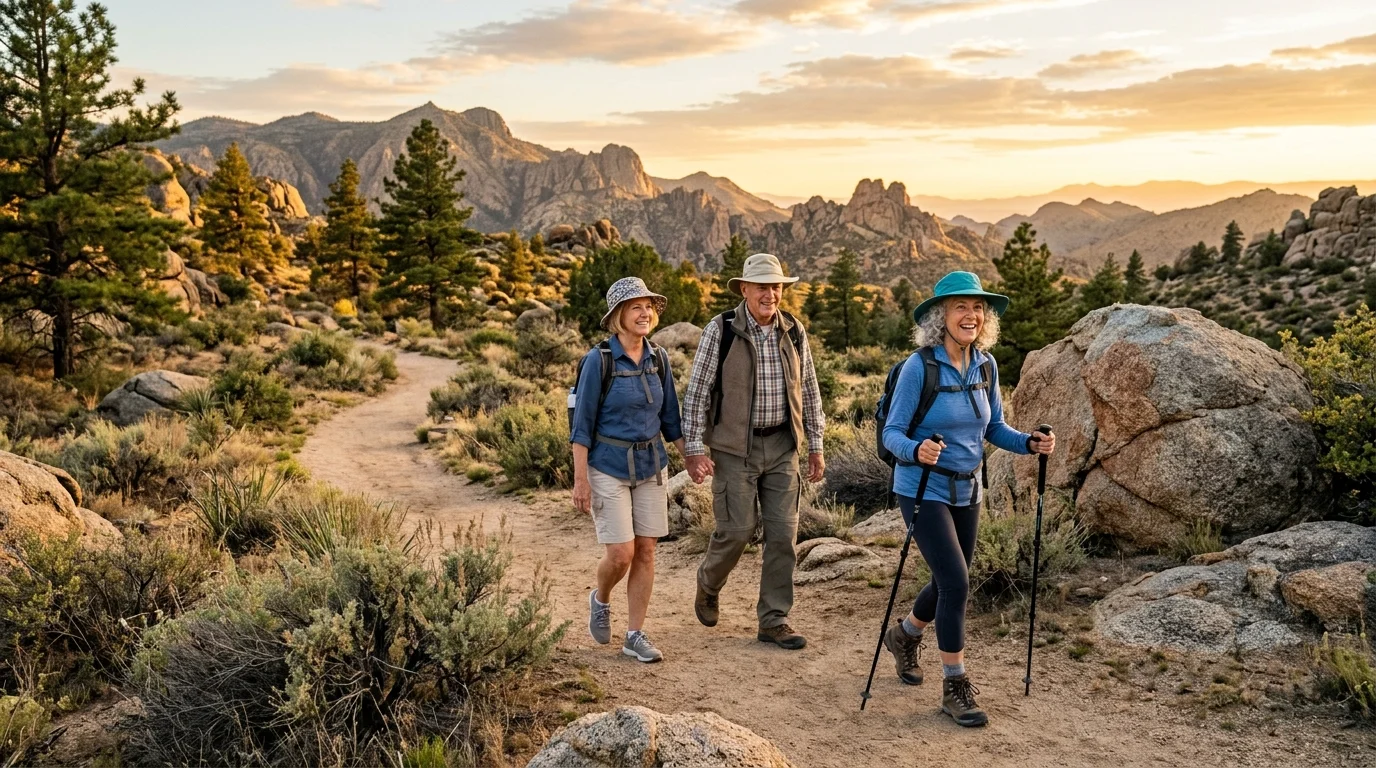
With 40% of Prescott residents over 65, staying active matters more than ever. Here are five gentle exercises that can reduce your fall risk, protect your joints, and add years to your life — all right here in the Prescott area.
If you've retired to the Prescott area — or you've called it home for years — you already know this is a special place. The clean mountain air, four mild seasons, and hundreds of miles of trails make it one of Arizona's best-kept secrets for an active lifestyle.
But here's a number that might surprise you: only 15.5% of adults over 65 meet the CDC's guidelines for both aerobic and strength-building activity (CDC, 2024). In a community where more than 40% of residents are 65 or older, that's a gap worth closing.
The good news? You don't need to run marathons or lift heavy weights. Low-impact exercise — the kind that's gentle on your joints but powerful for your health — can reduce your risk of falls, dementia, heart disease, and chronic pain. And Prescott is one of the best places in the country to do it.
What Does the Research Say About Walking for Seniors?
Walking is the single most studied and most accessible form of exercise for older adults. A landmark 2025 meta-analysis published in The Lancet Public Health, covering 57 studies and more than 160,000 adults, found that walking 7,000 steps per day is associated with a 47% reduction in all-cause mortality, a 38% reduction in dementia risk, and a 28% reduction in falls (The Lancet, 2025).
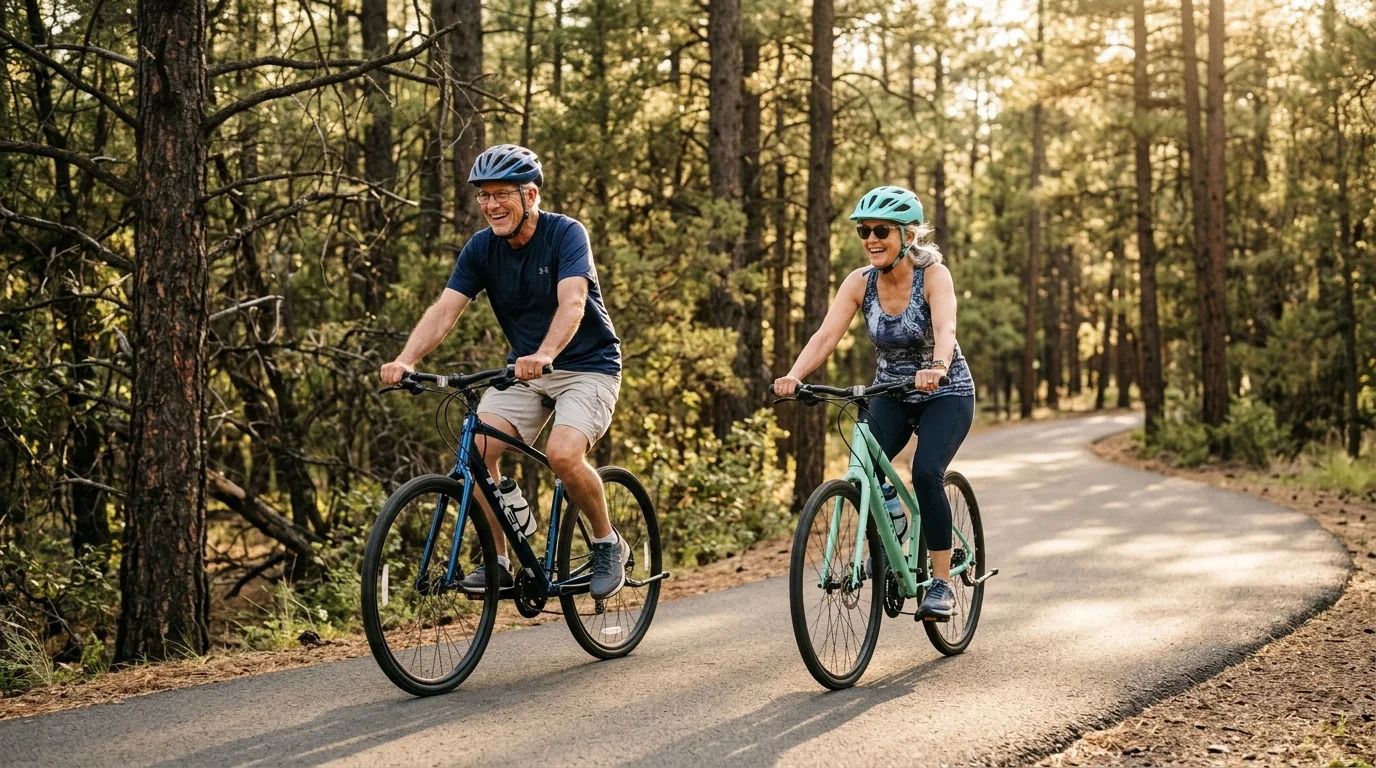
You don't need to hit 10,000 steps. Benefits start at just 4,000 steps per day — roughly a 30-minute walk. And Prescott offers some of the most beautiful walking terrain in the Southwest.
The Peavine Trail is a favorite for a reason: it's flat, paved, and stretches over 6 miles through the Granite Dells with views of Watson Lake. The Prescott Greenways Trail System connects neighborhoods throughout town with wide, accessible paths. And if you prefer something more natural, the trails around Thumb Butte and Goldwater Lake offer gentle grades with shade from Ponderosa pines.
Walking with a friend or in a group adds a social component that research consistently links to better mental health outcomes in retirees. It's exercise, fresh air, and community — all in one.
Can Tai Chi Really Prevent Falls?
Falls are the leading cause of injury-related death in adults over 65, and fear of falling can be just as limiting as a fall itself. Tai chi directly addresses both.
A meta-analysis of 18 randomized controlled trials involving 5,469 older adults found that tai chi reduces fall risk by 24%. When practiced three or more times per week, the benefit increases — with a 33% reduction in fall risk (Frontiers in Public Health, 2023).
Tai chi works because it trains exactly what aging bodies need: balance, coordination, lower-body strength, and body awareness. The slow, flowing movements look simple, but they challenge your stabilizer muscles in ways that standing on one foot at the kitchen counter can't replicate.
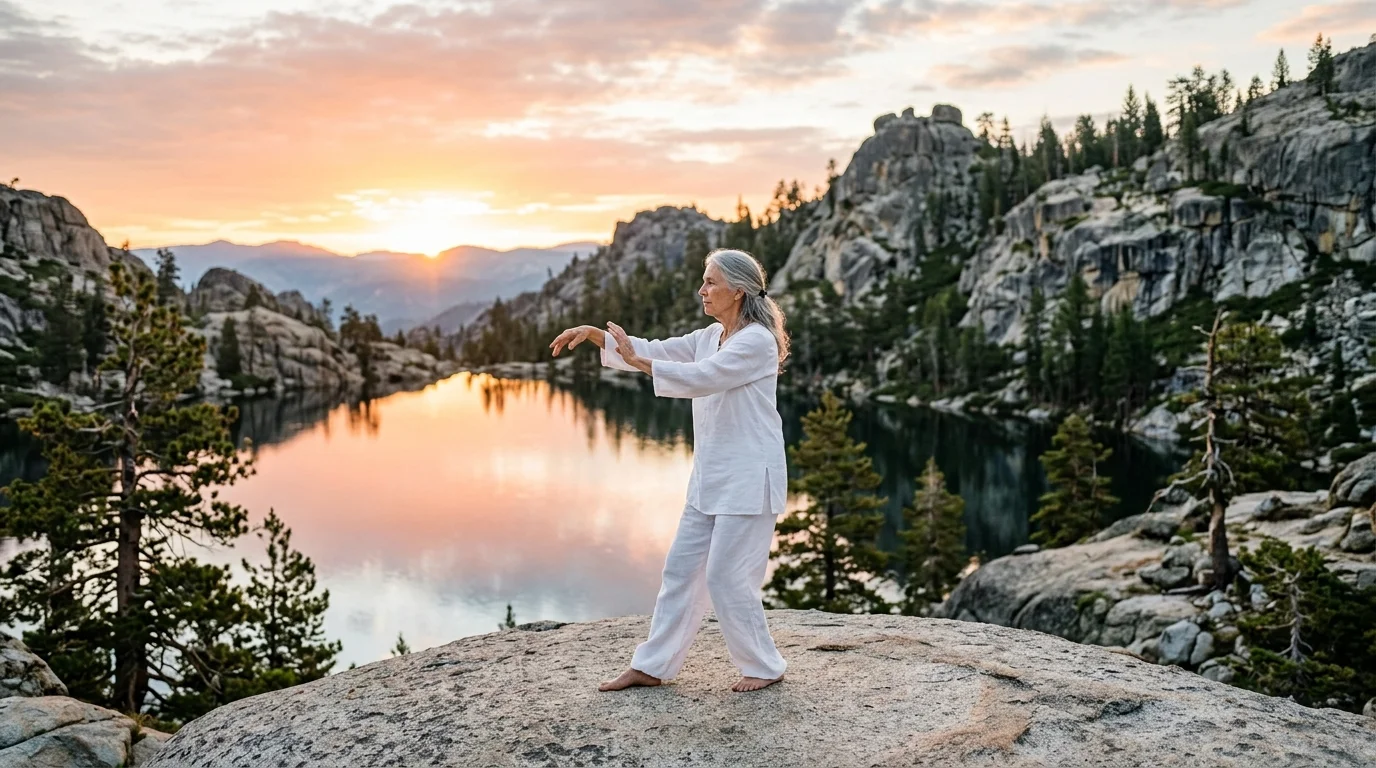
In Prescott, several community centers and yoga studios offer tai chi classes designed for beginners. The Prescott Adult Center and James Family Prescott YMCA both run regular sessions. On calm mornings, you'll even find small groups practicing at Watson Lake — with the granite boulders and still water as a backdrop, it's hard to imagine a more peaceful setting.
Why Is Swimming So Effective for Arthritis and Joint Pain?
If you have arthritis, osteoporosis, or joint replacements, water is your friend. Submerging to waist depth unloads up to 90% of your body weight from your joints, according to the Arthritis Foundation. That means you can move freely, build strength, and improve range of motion — without the impact that makes land-based exercise painful.
A systematic review of 20 randomized controlled trials found that aquatic exercise produces significantly better pain reduction for osteoarthritis than no exercise — and is more effective than land-based exercise for managing joint pain (PMC, 2022).
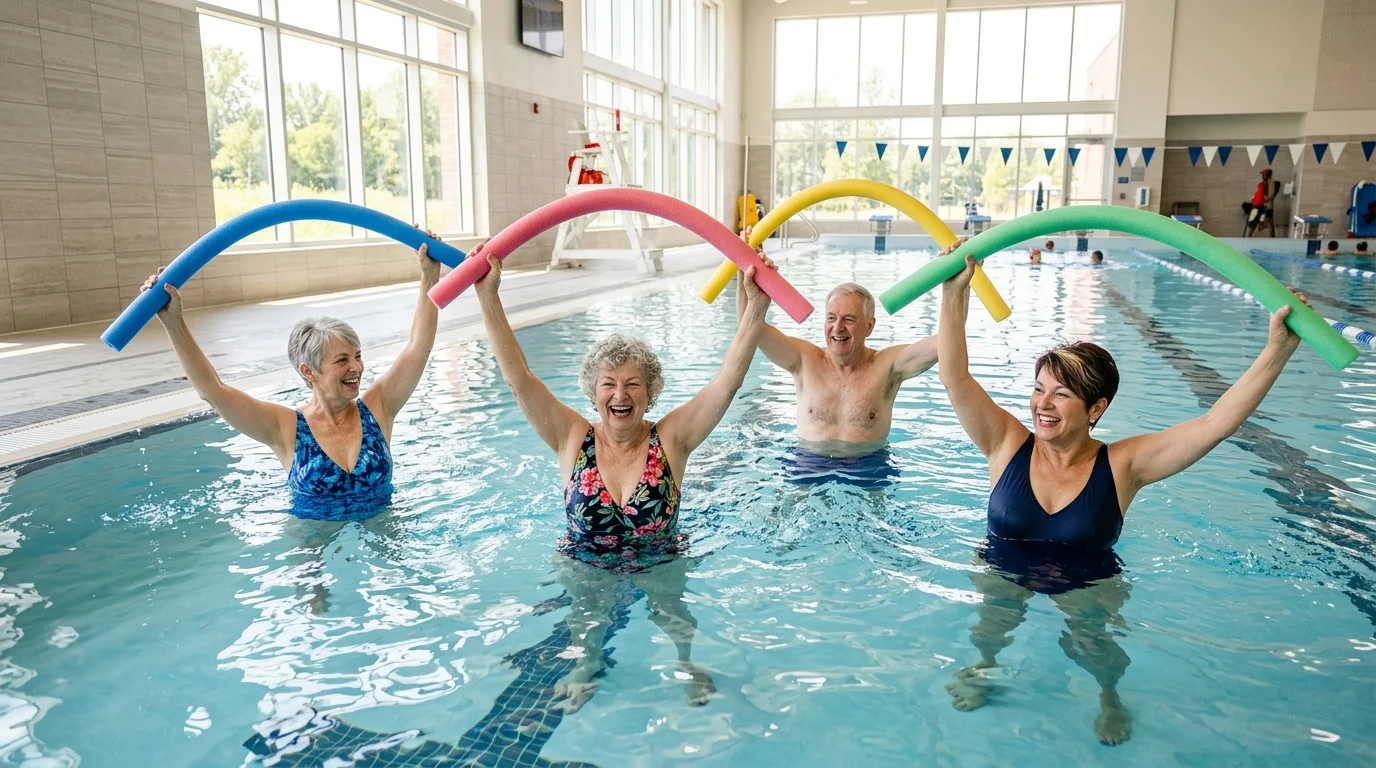
Water aerobics classes are especially popular with retirees because they combine cardio, resistance, and flexibility training in a single session. The buoyancy supports your body while the water's resistance strengthens your muscles — it's a full-body workout that feels more like play than exercise.
The Prescott YMCA offers warm-water aquatic fitness classes, and the Prescott Valley Aquatic Center has dedicated lap lanes and group classes. Both facilities are welcoming to beginners and those with mobility limitations.
What Can Yoga Do for Balance and Flexibility After 65?
A 2025 study published in PMC found that a 12-week yoga program significantly improved balance (p < 0.001) and functional mobility (p < 0.001) in seniors, with measurable reductions in fear of falling, anxiety, and depression (PMC, 2025). Separately, research showed that one year of hatha yoga increased total flexibility by 22.5 points in elderly participants — outperforming traditional calisthenics (PubMed, 2015).
Chair yoga is a particularly good entry point for seniors who have balance concerns or limited mobility. Every yoga pose can be modified — there's no "too old" or "not flexible enough" to start.
Prescott has a strong yoga community. Studios like Prescott Yoga and Inner Light Yoga offer gentle and chair yoga classes specifically designed for older adults. The dry, comfortable climate also makes outdoor yoga in parks and on patios a year-round option that's hard to beat.
Is Cycling Safe for Older Adults with Knee Problems?
Cycling is one of the most joint-friendly exercises available. An NIH-funded study found that regular cyclists are 17% less likely to experience frequent knee pain and 21% less likely to develop symptomatic osteoarthritis compared to non-cyclists (NPR/NIH, 2024).
The key is that cycling strengthens the muscles around the knee — particularly the quadriceps — without the pounding impact of walking or running. It's also excellent cardiovascular exercise that you can scale to your fitness level.
The Peavine Trail is ideal for easy cycling — it's flat, paved, and scenic. For those who want more distance, the Iron King Trail extends the ride even further. E-bikes have also become increasingly popular among Prescott retirees, making longer rides and gentle hills accessible to riders of all fitness levels.
If outdoor cycling feels intimidating, recumbent bikes at local gyms offer the same joint-friendly benefits with added back support and stability.
Why Does Exercise Variety Matter?
Here's a finding that doesn't get enough attention: it's not just how much you exercise — it's how many types of exercise you do. A 2026 study published in BMJ Medicine, following 111,000 participants over 30 years, found that engaging in the broadest variety of physical activities is associated with a 19% lower risk of all-cause mortality — independent of total exercise volume (BMJ Medicine, 2026).
That means a retiree who walks three days, swims once, and does yoga once per week may be better protected than someone who walks every single day for the same total minutes. Each activity trains different muscle groups, movement patterns, and neurological pathways.
Prescott's variety of facilities and outdoor spaces makes mixing it up easy. Walk the Greenways on Monday, swim at the Y on Wednesday, try tai chi on Friday — your body and brain will thank you for the variety.
Is It Ever Too Late to Start?
This is the question I hear most from patients who haven't exercised in years — or decades. The answer from the research is clear: it is never too late.
A 47-year longitudinal study from the Karolinska Institute, published in 2026, found that adults who became physically active later in life still increased their physical capacity by 5-10%, even after decades of inactivity (ScienceDaily/Karolinska, 2026).
And a 2025 JAMA study of 4,354 adults from the Framingham Heart Study found that late-life physical activity — starting between ages 65 and 88 — reduced dementia risk by 45%. For those carrying the APOE-e4 gene (the strongest genetic risk factor for Alzheimer's), the reduction was an extraordinary 66% (JAMA Network Open, 2025).
Even small amounts count. Research from Johns Hopkins found that as little as 5 additional minutes per day of moderate-to-vigorous activity can meaningfully reduce dementia risk in older adults, including those who are frail (Johns Hopkins, 2025).
You don't need to overhaul your life. Start with a 10-minute walk around the block. Add a minute each week. The body responds to movement at every age.
How Direct Primary Care Supports Your Active Life
At Prescott Professional Healthcare, we believe exercise is medicine — and we're here to help you use it safely. As a Direct Primary Care practice, Dr. Price offers unlimited office visits with no co-pays, same-day appointments for new concerns, and direct access by phone, text, or email.
What does that mean for your exercise routine? It means that when your knee acts up after a hike, you can call Dr. Price that same day — not wait two weeks for an appointment. It means she can review your medications for side effects (like dizziness) that affect your balance before you start tai chi. It means you can come in as often as you need to monitor chronic conditions like diabetes or hypertension as you become more active.
We also help coordinate with physical therapists, orthopedic specialists, and other providers when needed — so you have a team behind your goals, not just a once-a-year checkup.
If you're ready to start moving, we'd love to help you build a plan that fits your body, your goals, and your life here in Prescott. Become a member or contact us to learn more.
Frequently Asked Questions
What is the best low-impact exercise for seniors over 65?
Walking is the most accessible and well-researched option. A 2025 Lancet meta-analysis of 160,000 adults found that walking 7,000 steps per day reduces all-cause mortality by 47% and dementia risk by 38%. It requires no equipment, can be done on Prescott's many trails, and is easy to scale up gradually.
How much exercise do seniors need per week?
The CDC recommends at least 150 minutes per week of moderate-intensity aerobic activity (like brisk walking), plus muscle-strengthening activities on 2 or more days, and regular balance training. That breaks down to about 30 minutes a day, five days a week. However, Johns Hopkins research shows even 5 extra minutes daily can reduce dementia risk.
Can exercise reduce the risk of dementia in older adults?
Yes, significantly. A 2025 JAMA study following 4,354 adults found that late-life physical activity (ages 65-88) reduced dementia risk by 45%. For those with the APOE-e4 gene (the highest genetic risk factor for Alzheimer's), regular exercise was linked to a 66% lower risk.
Is it too late to start exercising at 70 or older?
It is never too late. A 47-year longitudinal study from the Karolinska Institute (2026) found that adults who became physically active later in life still increased their physical capacity by 5-10%, even after decades of inactivity. The body responds to movement at any age.
How does Direct Primary Care help seniors stay active?
With DPC, you have unlimited visits and direct access to your physician by phone, text, or email. Dr. Price can help you design a safe exercise plan, monitor chronic conditions that affect mobility, adjust medications that cause dizziness, and address aches or injuries the same day — so a sore knee doesn't become a reason to stop moving.