
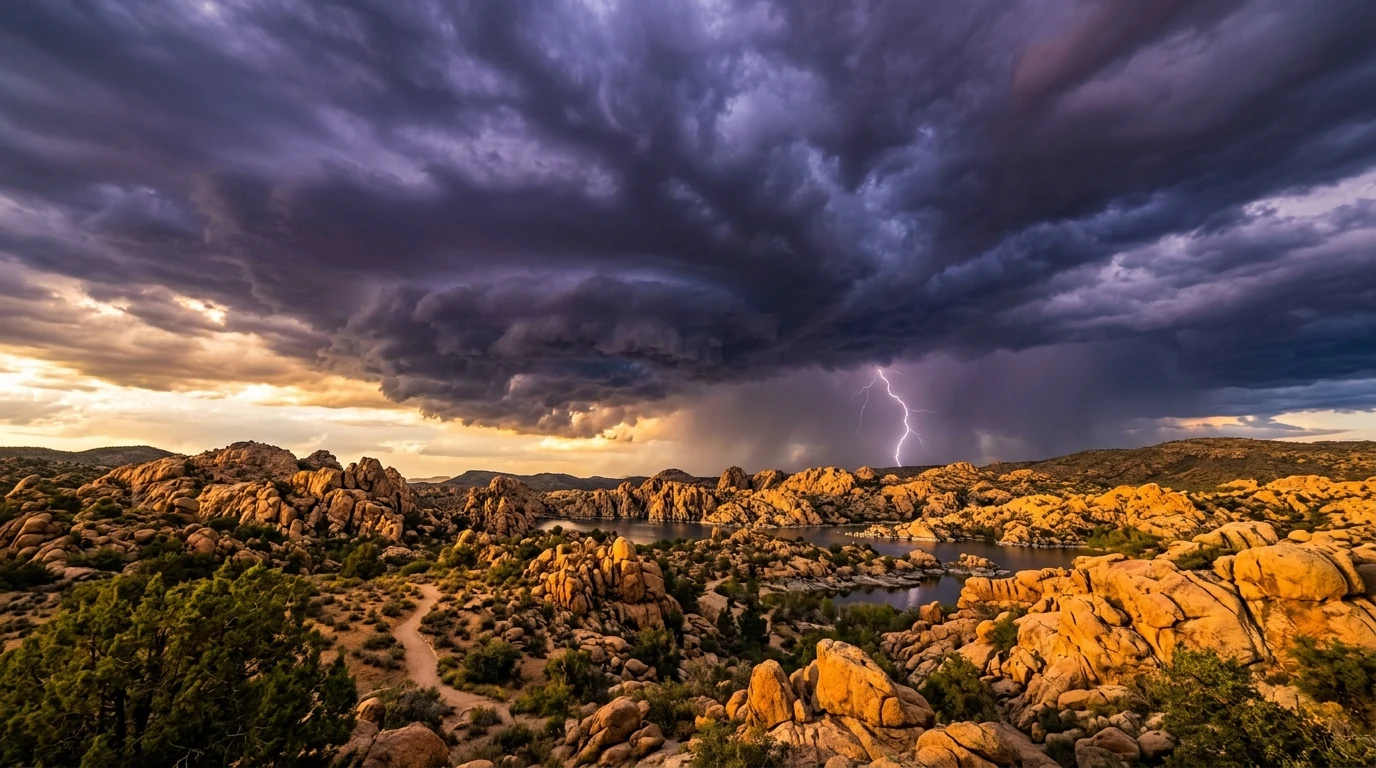
Valley Fever cases in Prescott's region surged 561% over 17 years. Monsoon mold spores spike 7x after rain. Flash floods kill more people than any other weather event. Here's how to stay safe and healthy through Arizona's wildest season.
Every year around the Fourth of July, the wind shifts. The dew point climbs. And the sky over Prescott starts building the towering cumulus clouds that announce monsoon season has arrived.
For the next three months, Prescott gets dramatic afternoon thunderstorms, spectacular lightning displays, and the rain that turns the high desert green. It's beautiful. It's also the season that sends the most patients through my door with weather-related health concerns.
Here's what the research says about monsoon's health risks — and how Prescott residents can prepare for each one.
Key Takeaways
- Valley Fever in Prescott's Plateaus region surged 561% from 2005-2022 — the highest increase in Arizona (CDC MMWR, 2026)
- Monsoon mold spores spike 7x after rain events — both outdoors and indoors (PMC, 2020)
- 80% of heat-related deaths occur in adults over 60 (Harvard Medicine, 2024)
- Flash floods are the #1 weather-related killer in the U.S. (NOAA)
Why Is Valley Fever Surging in the Prescott Area?
Arizona reported 14,763 Valley Fever (coccidioidomycosis) cases in 2024 — up from 10,990 the year before, according to CDC data. The true burden is estimated at 206,000-360,000 symptomatic cases per year nationally — 10 to 18 times more than reported.
But the statistic that should get every Prescott resident's attention comes from a 2026 CDC MMWR report: Valley Fever incidence in Arizona's Plateaus region — which includes Yavapai County and Prescott — increased 6.61 times between 2005-2007 and 2020-2022. That's a 561% increase. The largest relative increase of any region in Arizona.
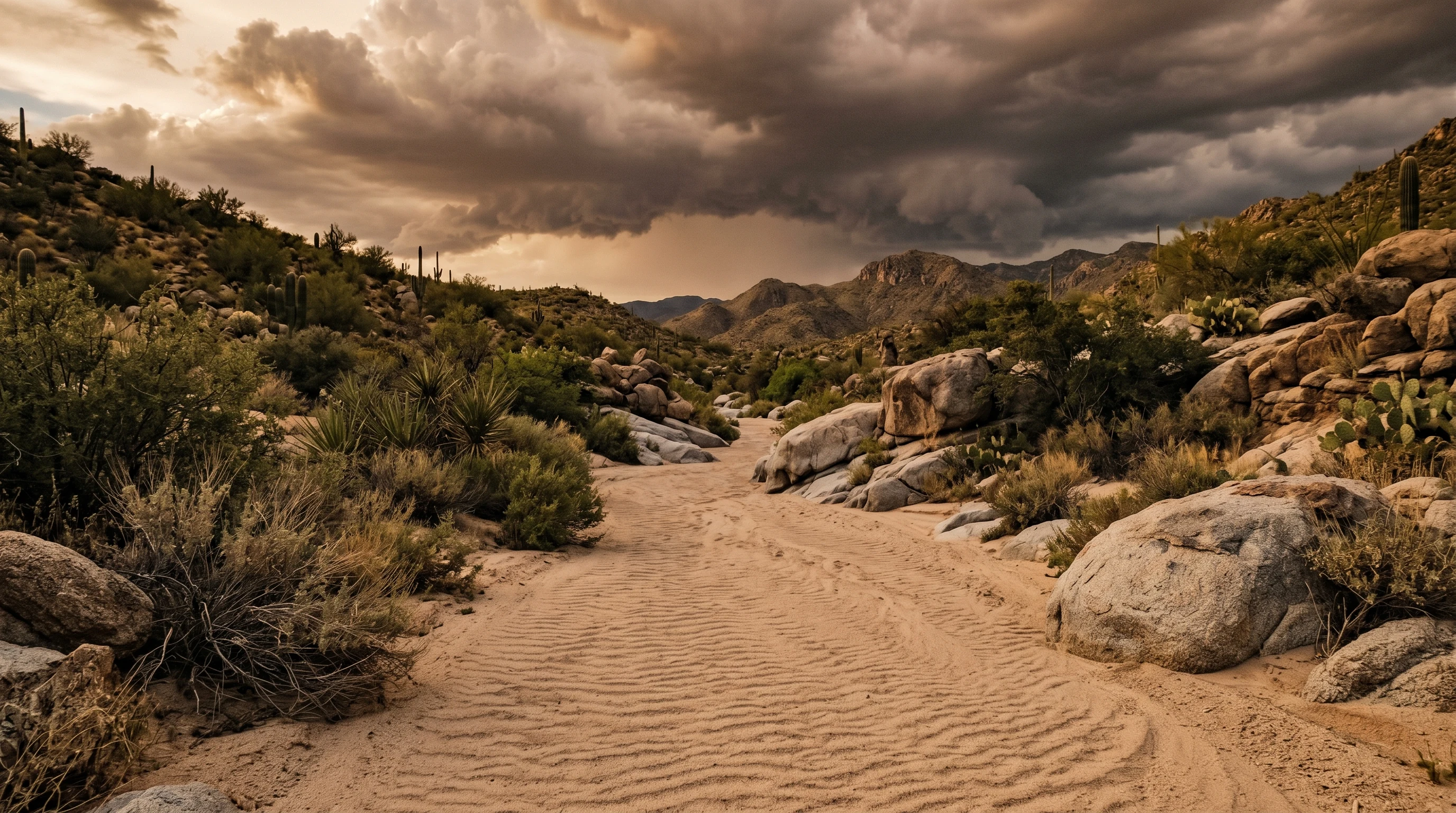
Valley Fever is caused by Coccidioides fungal spores that live in desert soil. When wind or construction disturbs that soil — which happens constantly during monsoon dust storms — the spores become airborne. You breathe them in. And for some people, what starts as a mild cough turns into a serious lung infection.
I've seen an increase in Valley Fever cases in my own practice over the past several years. What's concerning is that many patients — and some physicians — don't think of Valley Fever in Prescott because it's historically been considered a "southern Arizona" disease. But the CDC data is clear: it's here, it's growing, and the Prescott area specifically is seeing the fastest rise in the state. If you develop a cough, fever, or unexplained fatigue that persists for more than a week during or after monsoon season, it's worth testing for.
Prevention tips:
- Stay indoors during dust storms and for 1-2 hours afterward
- Keep car and home windows closed during windy conditions
- Wear an N95 mask if you must be outdoors in dusty conditions
- Be especially cautious if you're on immunosuppressive medications or have diabetes — both increase Valley Fever risk
- Know the symptoms: persistent cough, fever, chest pain, fatigue, joint aches, rash
How Does Monsoon Affect Your Allergies?
A PMC environmental monitoring study (2020) found that fungal bioaerosol concentrations during monsoon rain are approximately 7 times higher than during dry conditions — jumping from 96 CFU/m3 to 693 CFU/m3. Indoor mold concentrations increase by a similar factor.
Approximately 26% of U.S. adults suffer from seasonal allergies, including mold allergies (AAFA). In the Southwest, mold spore counts can spike 5-10x within 24-48 hours after a rain event. This is why many Prescott residents who feel fine during the dry months suddenly develop congestion, sneezing, and itchy eyes once the monsoon storms start rolling in.
The pattern is distinctive: dry days are fine, then a storm hits, and within a day or two your sinuses explode. If this describes your experience every July through September, it's likely a mold spore response rather than a cold.
Management strategies:
- Keep windows closed during and for 24-48 hours after rain
- Run HEPA air purifiers in your bedroom and living areas
- Shower and change clothes after spending time outdoors post-rain
- Monitor mold levels through weather apps and local pollen trackers
- Talk with your doctor about adjusting allergy medications seasonally — what works in spring may not be enough for monsoon
Are You Prepared for Monsoon Heat?
More than 80% of the estimated 12,000 heat-related deaths annually in the U.S. occur in people over age 60, according to Harvard Medicine (2024, citing CDC data). Maricopa County reported 608 heat-related deaths in 2024, with nearly 60% of victims aged 50 or older.
Prescott's altitude moderates the worst of Arizona's heat — we don't see Phoenix's 115°F days. But pre-monsoon June and early July can still push into the low 90s, and the transition from dry heat to monsoon humidity catches many people off guard. When humidity rises, your body's ability to cool through sweating decreases, and heat stress risk climbs.
Here's what I see clinically that doesn't get enough attention: heat-related illness in Prescott's seniors often isn't the dramatic heatstroke you read about in Phoenix. It's subtler. It's the patient who gets a little dehydrated during a warm afternoon, becomes dizzy, falls, and breaks a hip. Or the patient whose blood pressure medication works differently in the heat, causing lightheadedness they weren't expecting. The heat doesn't directly cause the injury — but it's the trigger in a cascade that leads to one. This is why checking in with your doctor about medication adjustments before monsoon season matters.
Heat safety for seniors:
- Schedule outdoor activity before 10am or after 5pm during June-July
- Increase your water intake — you need even more at Prescott's altitude in heat
- Know the signs: dizziness, confusion, nausea, headache, rapid heartbeat
- Keep air conditioning working and don't rely solely on evaporative coolers once humidity rises
- Check on neighbors who live alone — heat illness can progress quickly in isolated seniors
Flash Flood Safety: Prescott's Terrain Makes It Serious
Flash floods are the top weather-related killer in the United States, causing approximately 125-145 deaths per year, according to NOAA. Arizona's deadliest flood event killed 23 people during the 1970 Labor Day floods.
Prescott's granite terrain is particularly dangerous during monsoon downpours. Water doesn't absorb into granite — it sheets off rapidly, channeling into washes and drainages that can go from dry to raging in minutes. Dry Creek, Granite Creek, and numerous smaller washes throughout the area can flash flood with little warning.
Critical rules:
- Turn around, don't drown. Never drive through flooded roadways. Just 6 inches of fast-moving water can knock you off your feet; 12 inches can carry away a vehicle.
- If you're hiking — get to high ground immediately when you see lightning or hear thunder. Monsoon storms can produce localized flooding miles from where rain is visible.
- Know your neighborhood's drainage patterns. If you live near a wash, know your evacuation route.
- Keep an emergency kit with water, medications, and a flashlight — power outages during monsoon storms are common.
Dust Storms and Your Lungs
Monsoon outflow winds can produce dust storms with gusts exceeding 100 mph, according to the American Lung Association. Dust particles can linger in the air for hours to days. While Prescott sees fewer massive haboobs than the Phoenix valley, localized dust events during monsoon outflow are common.
Children, older adults, and people with existing lung disease (COPD, asthma, pulmonary fibrosis) are most at risk. Medical literature has documented "haboob lung syndrome" — severe respiratory illness requiring hospitalization days after major dust events.
The concern isn't just the dust itself. Dust storms also carry Valley Fever spores, mold, pollen, and particulate matter that aggravate respiratory conditions. If you have a chronic lung condition, monsoon season requires extra vigilance.
Lightning: Arizona's Underestimated Risk
Arizona experiences approximately 6 million lightning strikes per year, concentrated during the 3-month monsoon season, according to the University of Arizona Health Sciences. About 10% of lightning strike victims die; 90% survive but may face long-term neurological effects.
What many people don't realize: nearly one-third of lightning injuries occur indoors. Lightning can travel through plumbing, electrical wiring, and phone lines. During an active storm, avoid contact with corded phones, plumbing fixtures, and electrical equipment.
Monsoon lightning in the Prescott area tends to be most dangerous between 2pm and 6pm, when afternoon storms peak. The granite terrain that makes our landscape beautiful also makes it conductive. If you're hiking at Watson Lake, the Granite Dells, or any exposed trail and you hear thunder — head for your vehicle or a substantial building immediately. The 30-30 rule is simple: if the time between lightning flash and thunder is under 30 seconds, you're within striking distance. Stay sheltered for 30 minutes after the last thunder.
Your Monsoon Health Checklist
Before monsoon season hits, take these steps:
- Review medications with your doctor. Heat and humidity can affect how blood pressure medications, diuretics, and other drugs work. An adjustment before monsoon season can prevent problems during it.
- Stock up on allergy medications. Don't wait until you're congested. Start antihistamines before mold season peaks.
- Check your air filters. Replace HVAC and air purifier filters. Consider upgrading to HEPA if you have respiratory conditions.
- Prepare an emergency kit. Water, medications (72-hour supply), flashlight, phone charger. Power outages happen during monsoon storms.
- Know your body. If you develop a persistent cough, unexplained fever, or chest pain during monsoon season — don't assume it's a cold. Valley Fever mimics flu and can be serious if untreated.
At Prescott Professional Healthcare, monsoon season is when our Direct Primary Care model shines brightest. Same-day appointments mean you don't wait weeks to get a cough checked. Direct phone access means you can describe symptoms before deciding whether to come in. And unlimited visits mean you don't skip the follow-up because of a co-pay.
Become a member or contact us at 928-515-2803 before the storms start. Because the best time to prepare for monsoon season is before the first lightning strike.
Frequently Asked Questions
What is Valley Fever and should Prescott residents worry?
Valley Fever (coccidioidomycosis) is a fungal lung infection caused by spores in desert soil. Arizona reported 14,763 cases in 2024 (CDC). Prescott's Plateaus region saw a 561% increase in incidence from 2005-2022 — the largest relative increase in Arizona (CDC MMWR, 2026). Symptoms mimic flu: cough, fever, fatigue, chest pain.
How much do mold spores increase during monsoon season?
Fungal bioaerosol concentrations during monsoon rain are approximately 7 times higher than during dry conditions — from 96 CFU/m3 to 693 CFU/m3 (PMC environmental monitoring study, 2020). Indoor mold concentrations also increase roughly 7x during rain events. Keep windows closed during and after storms.
Are flash floods really dangerous in Prescott?
Yes. Flash floods are the top weather-related killer in the U.S., causing approximately 125-145 deaths per year (NOAA). Arizona's deadliest flood killed 23 people. Prescott's granite terrain channels water rapidly during monsoon downpours. Never drive through flooded washes — just 6 inches of moving water can knock you down.
How does monsoon heat affect seniors specifically?
More than 80% of the estimated 12,000 heat-related deaths annually in the U.S. occur in people over age 60 (Harvard Medicine/CDC, 2024). Maricopa County reported 608 heat deaths in 2024 with nearly 60% of victims aged 50+. Prescott's altitude moderates heat, but pre-monsoon temperatures still reach the low 90s.
What should I do about allergies during monsoon season?
Approximately 26% of U.S. adults suffer from seasonal allergies including mold (CDC). During monsoon, mold spore counts can spike 5-10x within 24-48 hours after rain. Keep windows closed after storms, run air purifiers, shower after outdoor exposure, and talk with your doctor about adjusting allergy medications seasonally.