
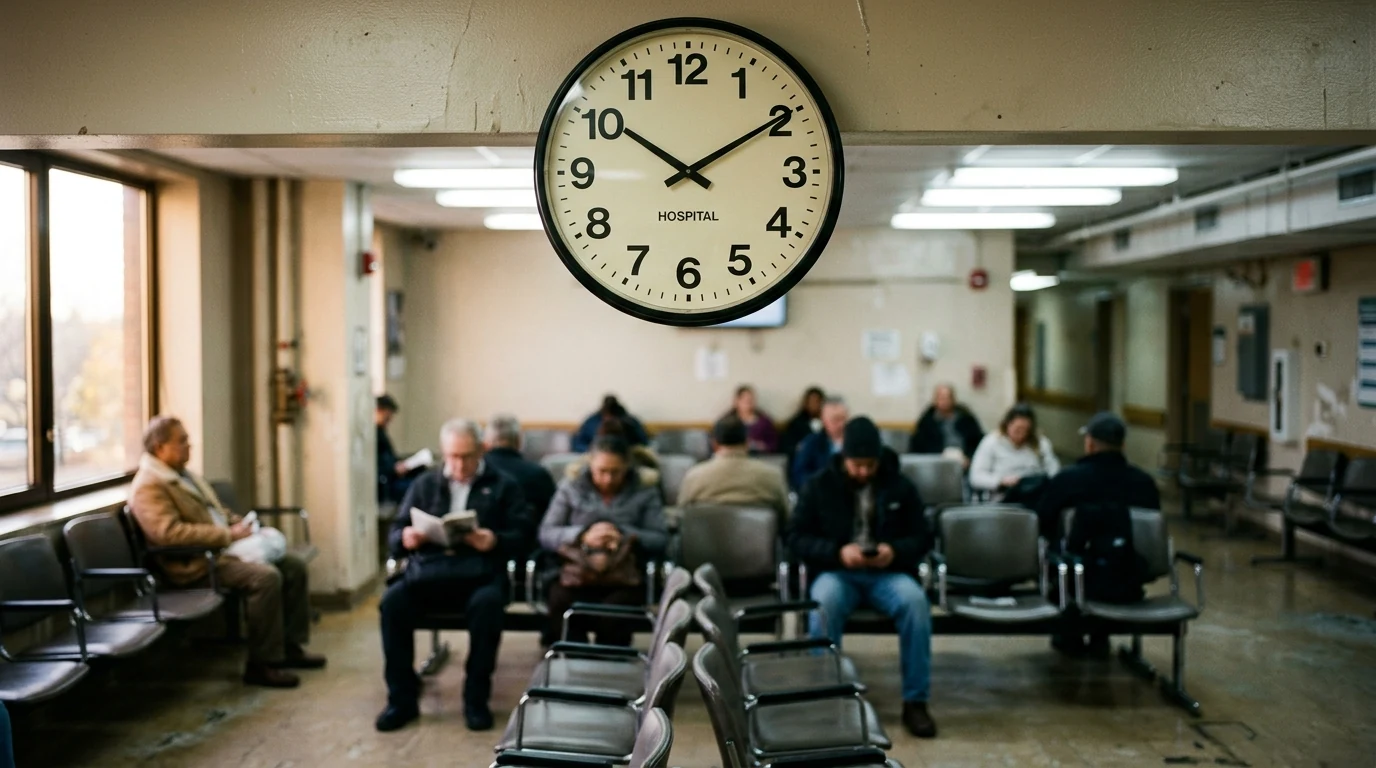
Doctors interrupt patients after 11 seconds. Visits cover 6 topics in 16 minutes. And 49% of clinical questions go unanswered due to time pressure. Here's what rushed medicine costs you — and what the alternative looks like.
Here's a number that should bother you: physicians elicit the patient's agenda — the "what brings you in today" question — in only 36% of encounters. When they do ask, they interrupt the patient after a median of just 11 seconds. And when patients aren't interrupted? They finish their complete statement in a median of 6 seconds (Journal of General Internal Medicine, 2018).
Six seconds. That's all most patients need to say what's wrong. But two-thirds of the time, they never get asked. And when they are asked, they're cut off before they finish.
This isn't because your doctor is rude. It's because the system is broken. And the consequences show up in your health in ways most people never connect to visit length.
Key Takeaways
- Doctors interrupt patients after 11 seconds — and only ask what's wrong 36% of the time (JGIM, 2018)
- 84% of diagnostic errors in primary care trace to the clinical encounter (JAMA Internal Medicine)
- Physicians spend more time on their computer (36.2 min) than with you per visit (AMA, 2024)
- DPC visits average 30-60 minutes with panels of ~413 patients vs. 2,000+
What Actually Happens in a 15-Minute Visit?
Research published in Health Services Research found that the average primary care visit lasts 18 minutes with a median of 15.7 minutes — and covers a median of 6 topics. Do the math: after the greeting, the physical exam, and the primary complaint, each secondary health concern gets approximately 1.1 minutes of discussion.
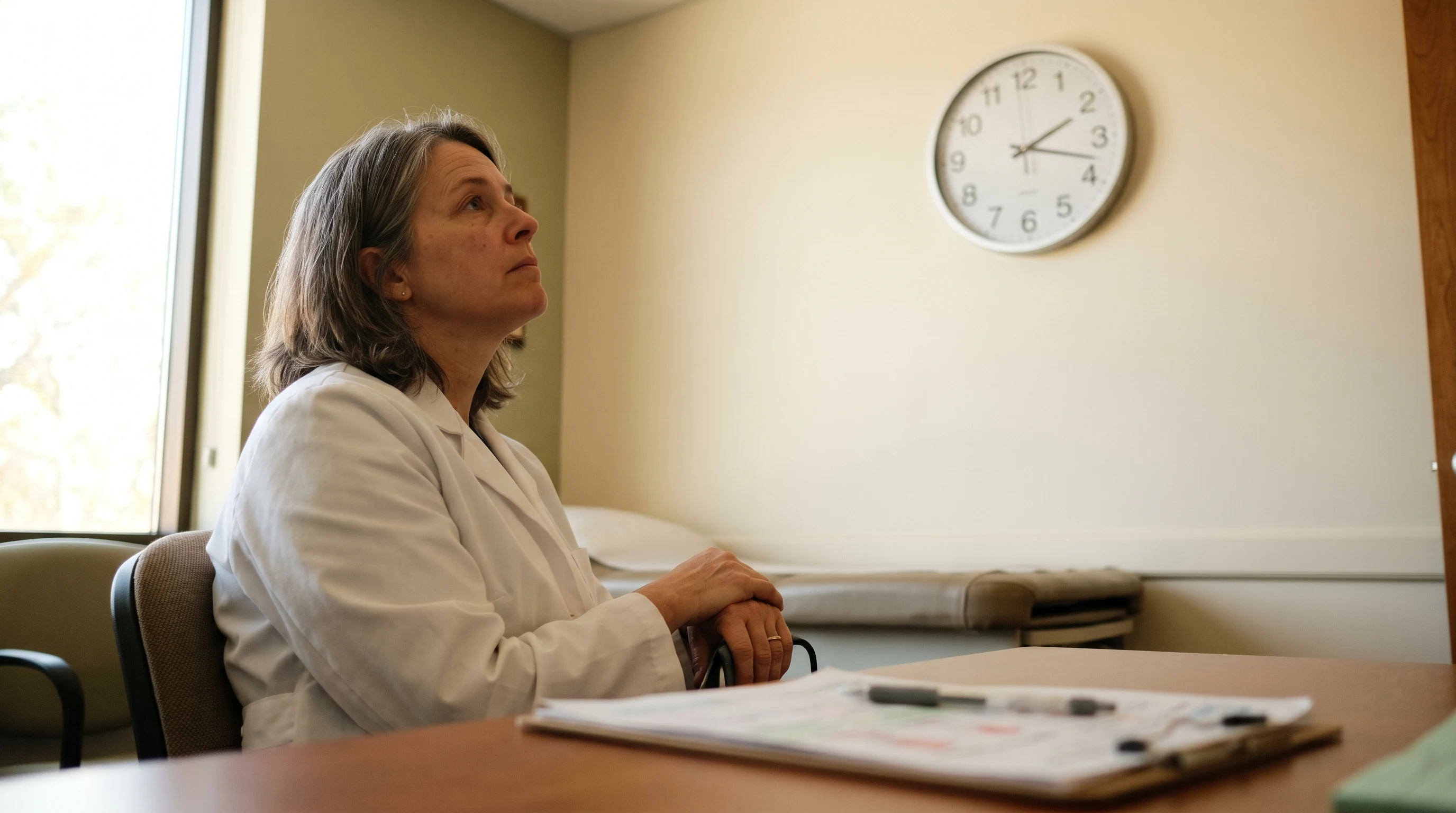
If you came in for a blood pressure check but also wanted to mention your sleep problems, a new knee pain, and a question about your medication side effects? Two of those topics are getting 60 seconds. The third probably isn't getting mentioned at all.
A 2025 patient survey found that 68% of patients report their doctor appointments feel rushed "sometimes or always." That's not a perception problem. When you're covering 6 topics in 16 minutes, it is rushed.

Before I opened my DPC practice, I was in the traditional system. I know what it's like to glance at the clock and realize I have 4 minutes left with a patient who has 3 more questions. The guilt is real. You know you're not giving them what they need, but the next patient is already in the room waiting. It's a system designed for volume, not for care — and physicians feel it just as much as patients do.
What Gets Missed When Visits Are Too Short?
This is where the research gets serious. A systematic review published in Annals of Internal Medicine found that clinicians left 49% of clinical questions unanswered during patient visits. The primary reason? Lack of time — cited by 60% of respondents.
Half of your doctor's clinical questions — the questions that inform diagnosis and treatment — go unanswered because there isn't time to look up the answers, think through the complexities, or have the follow-up conversation that the question demands.
The downstream consequences are measurable. Research in JAMA Internal Medicine found that 84.2% of diagnostic errors in primary care involve breakdowns in the patient-practitioner clinical encounter. And 86.8% of those cases had the potential for moderate-to-severe patient harm.
Shortened visits don't just leave you feeling unheard. They create the conditions for missed diagnoses, incomplete medication reviews, and treatment plans that don't account for the full picture of your health.
Why Does Your Doctor Spend More Time on the Computer Than on You?
According to the AMA (2024), primary care physicians spend 36.2 minutes on electronic health record (EHR) documentation per visit — while the visit itself averages roughly 30 minutes. Your doctor now spends more time typing about your visit than having it.
This isn't because doctors love paperwork. It's because the insurance-based payment system requires extensive documentation for every code billed, every diagnosis recorded, every medication prescribed. The documentation proves the visit happened in a way that satisfies insurance requirements. It's billing compliance, not patient care.
Here's what patients rarely see: after your 15-minute appointment ends, your doctor spends another 20-35 minutes documenting it. Then they move to the next patient. Then more documentation. The AMA reports that 42% of physicians experience burnout symptoms — and the top drivers are excessive administrative tasks and inadequate time with patients. The system isn't just failing patients. It's grinding down the physicians too.
Can 15 Minutes Handle Chronic Disease Management?
For retirees managing multiple chronic conditions — which describes a significant portion of Prescott's population — the time math becomes impossible. A landmark study in the Annals of Family Medicine calculated that following recommended clinical guidelines for just 10 chronic diseases requires 3.5 hours per working day for stable patients.
If those conditions are uncontrolled? The time requirement balloons to 10.6 hours per day — exceeding the total time available for all patient care in a typical primary care practice.
This means that a physician managing a panel of 2,000+ patients, many of whom have 3-5 chronic conditions, cannot physically follow evidence-based guidelines for each patient. Something has to give. And what gives is time — your time, with your doctor, discussing your specific situation.
If you're managing hypertension, Type 2 diabetes, and osteoarthritis — three of the most common conditions in our retirement community — the idea that your physician can meaningfully address all three in a 15-minute visit is mathematically impossible.
What Happens When Visits Are Longer?
Research in the Journal of General Internal Medicine found that patient satisfaction is linearly associated with visit length. This wasn't a threshold effect — it wasn't that visits needed to reach some minimum to satisfy patients. Longer visits produced progressively higher satisfaction scores at every increment.
Visit duration varied more than 10-fold among physicians in the study, from 5.8 minutes to 72.2 minutes. The mean was 22.3 minutes. The relationship held across all measured durations: more time consistently meant happier, better-informed, more engaged patients.
What I've observed in my own practice confirms this research, but adds a layer the studies don't capture: longer visits don't just improve satisfaction — they change what patients are willing to disclose. In a 15-minute visit, patients mention their biggest concern and move on. In a 45-minute visit, they mention the concern they came in for, then — usually around the 25-minute mark — they share the thing that's actually bothering them. The embarrassing symptom. The mental health concern. The question they've been carrying for months. That second layer of disclosure is where the most important medicine happens. And it only emerges when there's enough time for trust to build.
The DPC Alternative: What 30-60 Minutes Actually Looks Like
Direct Primary Care restructures the economics so that longer visits are the default, not the exception. At Prescott Professional Healthcare, Dr. Price manages approximately 413 patients — compared to the 1,800-2,500 that traditional primary care physicians carry (Journal of General Internal Medicine, 2024).
With one-quarter the patient load, every visit can be 30-60 minutes. Not because we're inefficient — because we're not trying to compress your healthcare into a billable unit. There's time to review all your medications. Time to discuss how your arthritis is affecting your sleep. Time to answer every question you brought — and the ones that come up mid-conversation.
There's also time for your doctor to think. One of the most underappreciated consequences of the 15-minute visit is that it doesn't give physicians time to synthesize. To connect the dots between your new fatigue, your medication change, and the lab result from last month. Complex medicine requires reflection — and reflection requires time.
You Deserve More Than 11 Seconds
The research is clear: short visits lead to unanswered questions, missed diagnoses, rushed treatment plans, and burned-out physicians. Longer visits produce better satisfaction, better communication, and the conditions for catching problems early.
You didn't work your whole career to retire in Prescott and accept a healthcare system that gives you 11 seconds to explain what's wrong.
At Prescott Professional Healthcare, Direct Primary Care means your visit starts when you sit down with Dr. Price — and ends when your questions are answered. Not when the clock runs out.
Become a member or call us at 928-515-2803. Your health deserves more than 7 minutes.
Frequently Asked Questions
How long is the average doctor appointment?
Research shows the average primary care visit lasts about 18 minutes, with a median of 15.7 minutes covering 6 topics — meaning each secondary health concern gets roughly 1.1 minutes of discussion (Health Services Research). Doctors now spend more time on their EHR (36.2 minutes per visit) than with the patient (AMA, 2024).
Do short doctor visits lead to medical errors?
Research in JAMA Internal Medicine found that 84.2% of diagnostic errors in primary care involve breakdowns in the patient-practitioner clinical encounter, with 86.8% of cases having potential for moderate-to-severe harm. Time pressure is cited as a contributing factor to missed diagnoses and unanswered questions.
How long are DPC appointments?
DPC physicians spend an average of 30-60 minutes per patient visit, compared to 15-20 minutes in traditional primary care (Journal of General Internal Medicine, 2024). This is possible because DPC doctors manage approximately 413 patients instead of 1,800-2,500, giving each patient significantly more time and attention.
Why do doctors seem so rushed?
Primary care physicians face a structural time crisis. They spend 36.2 minutes on EHR documentation per visit (AMA, 2024), 42% report burnout symptoms (AMA, 2025), and managing just 10 chronic conditions by guidelines requires 3.5-10.6 hours per day per physician (Annals of Family Medicine). The volume-based payment model forces this pace.
Does spending more time with your doctor improve outcomes?
Yes. Research in the Journal of General Internal Medicine found patient satisfaction is linearly associated with visit length — longer visits produce progressively higher satisfaction. A systematic review found 49% of clinical questions go unanswered due to time constraints, and clinicians cited lack of time as the primary reason 60% of the time.