
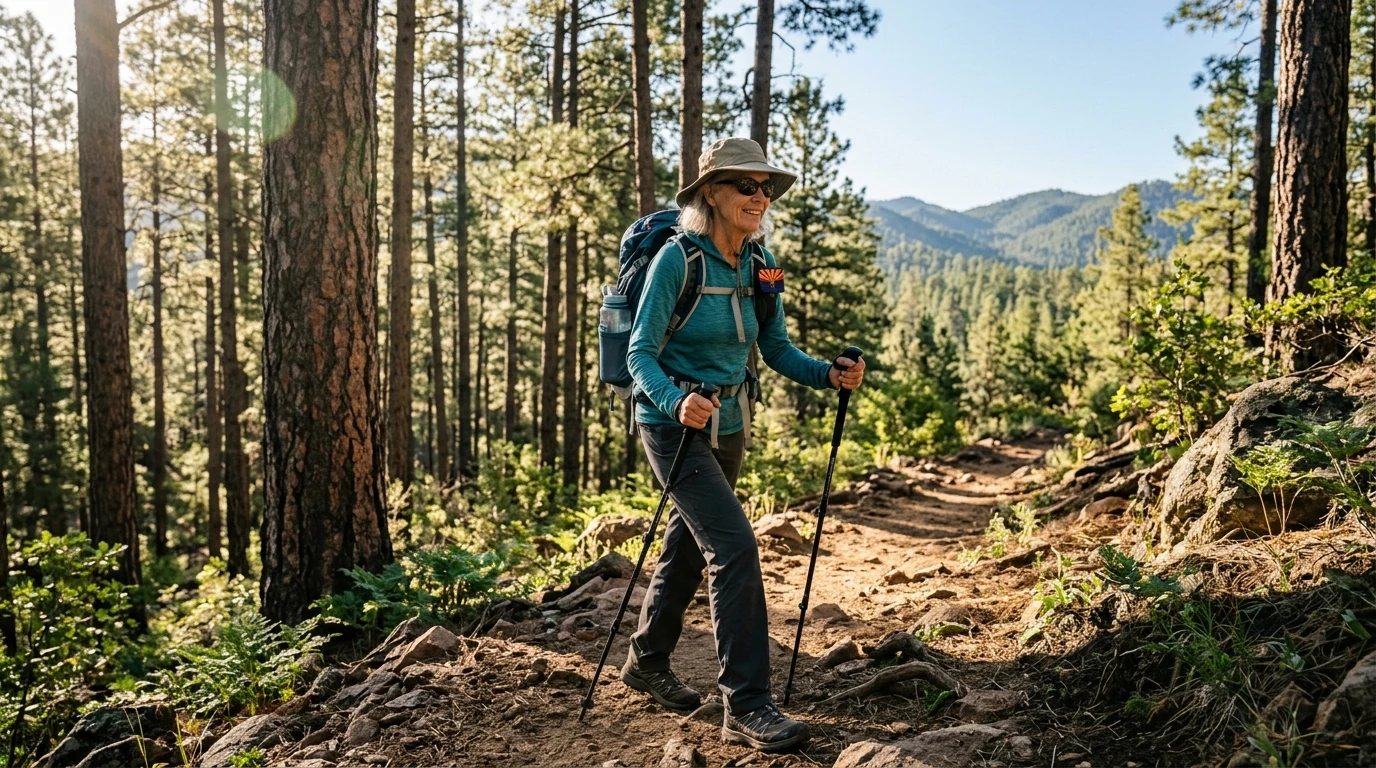
Maricopa County recorded 608 heat deaths in 2024 — nearly 60% in adults 50+. Yavapai County's heat-related ED visits hit a five-year high. Here's how Prescott hikers can stay safe through heat, dehydration, snakes, monsoon storms, and altitude.
Prescott's trails are one of the best parts of living here. Thumb Butte at sunrise, Granite Mountain in the cool of the morning, the Granite Dells at any time of year — there's a reason this town consistently shows up on "best places to retire" lists, and the trail access is a big piece of it.
But every summer, I see hikers in my office and in our region's emergency rooms for problems that were almost entirely preventable. Heat illness. Dehydration. Falls. Snakebites. The occasional lightning scare. The patterns repeat year after year.
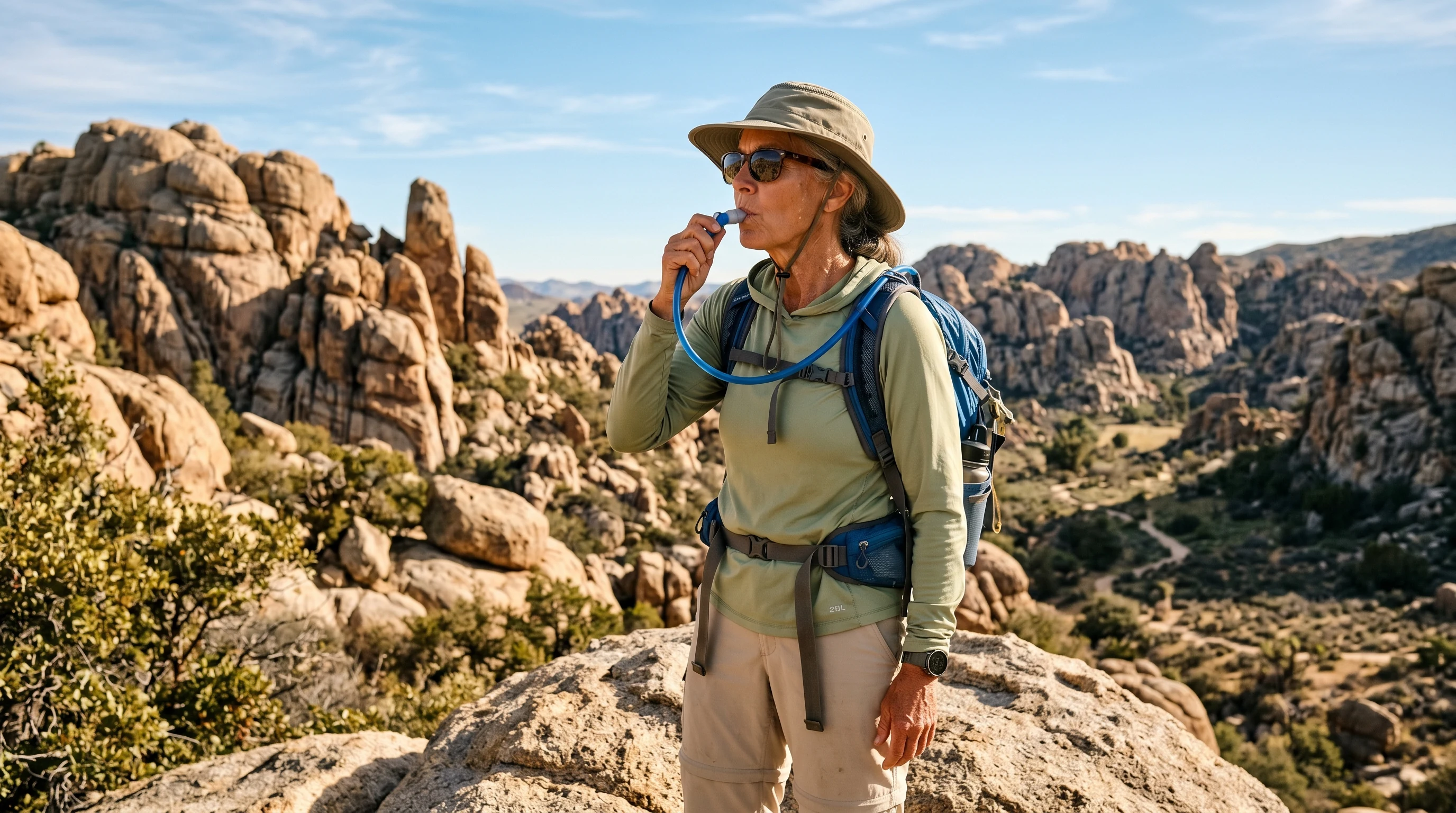
Here's what the data says about Arizona's summer hiking risks — and the practical, evidence-based steps every Prescott trail user should take.
Key Takeaways
- Maricopa County reported 608 confirmed heat-related deaths in 2024, with nearly 60% in adults age 50+ and 45% with cardiovascular disease (Maricopa County Public Health, March 2025)
- Yavapai County heat-related ED visits hit a five-year high of 70 in 2024 (AZDHS, May 2025)
- At altitude, you lose water through respiration twice as fast as at sea level — plan for ~1 liter per hour in heat plus an extra liter for every 1,000 ft of elevation gain (REI / Wilderness Medical Society, 2024)
- 1 in 4 Americans 65+ falls each year — and on rocky Prescott trails, a fall can mean an evacuation (CDC, 2024)
The Heat Numbers Should Get Your Attention
Arizona has been the epicenter of America's heat crisis. According to the Arizona Department of Health Services mortality report, more than 4,320 Arizonans died from heat exposure between 2013 and 2024. While Maricopa County dominates those numbers, Yavapai County — Prescott's home county — set its own record in 2024 with 70 heat-related ED visits, the highest in the five-year tracking period and nearly double the 2020 count.
The demographics matter for our patient population. Maricopa County Public Health data from 2024 shows that nearly 60% of confirmed heat deaths were in adults age 50 or older, and roughly 45% had a documented history of cardiovascular disease. CDC analysis finds that heat-related mortality in adults 65+ rose roughly 85% between 2000-2004 and 2017-2021.
Why are older adults at higher risk? Several reasons compound. The body's thirst response weakens with age. Common medications — diuretics, beta blockers, ACE inhibitors, certain antidepressants — interfere with the body's ability to dissipate heat. Underlying cardiovascular and kidney conditions reduce reserve. None of these are reasons to stop hiking. They're reasons to plan more carefully.
Heat Exhaustion vs. Heat Stroke — Know the Difference
This distinction can save a life on the trail. Per CDC NIOSH guidance:
Heat exhaustion looks like: heavy sweating, weakness, nausea, dizziness, muscle cramps, headache, cool/clammy skin. Body temperature is usually elevated but under 103°F. Treatment: Stop hiking. Get to shade. Cool the body with water on the skin and the head. Sip water and electrolytes. Most cases improve within 30 minutes. If symptoms aren't improving in 30 minutes — call 911.
Heat stroke is a medical emergency. Body temperature above 103°F. Hot, dry, red skin (sometimes still sweating, sometimes not). Confusion, slurred speech, agitation, or loss of consciousness. Treatment: Call 911 immediately. While waiting, move the person to shade, remove excess clothing, and cool aggressively — wet skin, ice packs to neck/armpits/groin, fan if possible. Do not try to make them drink if they're confused.
The mistake I see most often is people pushing through heat exhaustion and tipping into heat stroke. Once mental status changes, you have minutes, not hours.
Hydration at 5,400 Feet — More Than You Think
This is the single most underestimated factor in Prescott hiking. At higher elevation, you lose water through respiration roughly twice as fast as at sea level. Combined with sun, dry air, and exertion, dehydration sneaks up faster than newcomers expect.
REI, drawing on Wilderness Medical Society guidance, recommends roughly 1 liter of water per hour of hiking in heat — plus an additional liter for every 1,000 feet of elevation gain. That means a 4-hour Granite Mountain hike (1,663 ft of gain, per the Prescott National Forest data) calls for at least 5-6 liters of water for the day.
Practical hydration rules:
- Pre-hydrate the day before. If you're walking out the trailhead trying to catch up, you've already lost.
- Add electrolytes on hikes longer than 90 minutes. Plain water alone in heat can cause hyponatremia (low sodium) — a dangerous condition that mimics heat illness.
- Bring more than you think. Add 50% to your estimate. Your future self will thank you.
- Watch your urine. Pale yellow is the goal. Dark yellow means catch up immediately.
Snakes, Scorpions, and the Wildlife Question
Yavapai County is home to the Western diamondback, the Mojave rattlesnake, and the bark scorpion. Encounters are far less common than the internet makes them seem — but they happen. According to the Arizona Poison and Drug Information Center 2024 annual report, the center managed 1,503 bite/sting cases statewide in 2024, including 182 reported rattlesnake bites. Peak activity runs August through September — exactly when monsoon-cooled mornings draw both snakes and hikers onto the trails.
Arizona accounts for an outsized share of U.S. scorpion exposures — roughly 68% per peer-reviewed NIH analysis. The Arizona bark scorpion is the only species in the state with medically significant venom.
Practical wildlife rules:
- Stay on trail. Most rattlesnake bites happen when people leave the path or reach into rocks/brush.
- Wear closed shoes — not sandals — on rocky terrain.
- If you see a snake, freeze, then back away slowly. Don't try to handle, photograph closely, or kill it. Many bites happen during attempted relocation.
- If bitten: do not apply ice, a tourniquet, or attempt to suck out venom. Keep the limb at heart level. Get to a hospital. Most rattlesnake bites are treatable; the AZ Poison Center hotline is 1-800-222-1222.
- Shake out shoes, towels, and gear left outside overnight — bark scorpions hide in dark, cool places.
Monsoon Storms and Flash Flood Risk
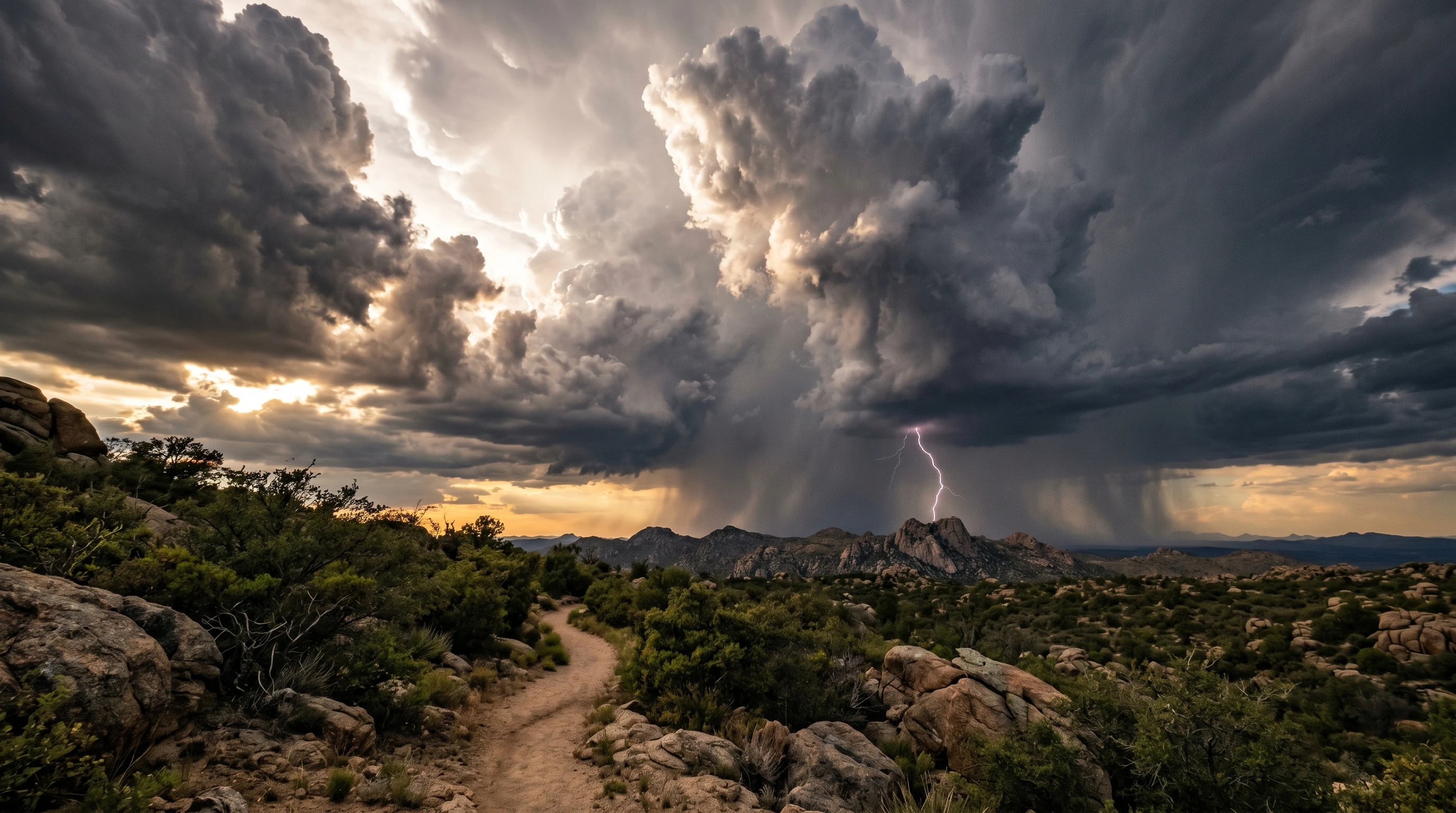
Arizona's monsoon season runs roughly June 15 through September 30, with peak activity from mid-July to mid-August. Arizona State Parks emphasizes that flash floods can develop with terrifying speed — sometimes from rainfall happening 15+ miles upstream of the canyon you're standing in. The sun can be shining at your location while a wall of water builds toward you.
Lightning is the second monsoon hazard. NOAA tracking shows Arizona consistently ranks among the top 10 states for lightning deaths. The Granite Dells, Thumb Butte, Watson Lake, and any exposed granite trail above the tree line is a lightning target — granite is conductive and the geography channels strikes.
Monsoon trail rules:
- Hike early. Be off-trail by noon during monsoon weeks.
- If you hear thunder, you're already within strike range. The 30-30 rule: less than 30 seconds between flash and thunder = take shelter immediately. Stay sheltered for 30 minutes after the last thunder.
- Avoid slot canyons, washes, and the Verde River area completely if monsoon storms are forecast within the watershed.
- Just 6 inches of moving water can knock down an adult; 18 inches can sweep a vehicle (NOAA).
Altitude and Cardiovascular Considerations
Prescott's 5,400 ft elevation qualifies as "moderate altitude" in cardiology literature. For most healthy people, the adjustment is barely noticeable. For people with coronary artery disease, congestive heart failure, severe COPD, or poorly controlled hypertension, the picture is different. A 2021 American Heart Association scientific statement warned that ascending to altitude can trigger arrhythmias, exaggerated blood pressure responses, and adverse events in people with CAD, CHF, or hypertension — particularly with rapid ascent from low elevation.
This is especially relevant for visiting friends and family who fly in from sea level and immediately want to hike. Give them 24-48 hours to acclimatize before strenuous trail effort. If they have a known cardiovascular condition, the conversation should happen before the trip, not after they're short of breath halfway up Thumb Butte.
Falls — The Risk That Doesn't Get Discussed Enough
According to the CDC's older adult fall data, roughly 1 in 4 Americans 65 and older falls each year, accounting for 3 million emergency department visits annually. Prescott's signature trails — Granite Dells with its smooth granite slabs, Thumb Butte's rocky descent, the boulder fields off Granite Mountain — are exactly the terrain where a small balance error becomes a fracture.
Practical steps:
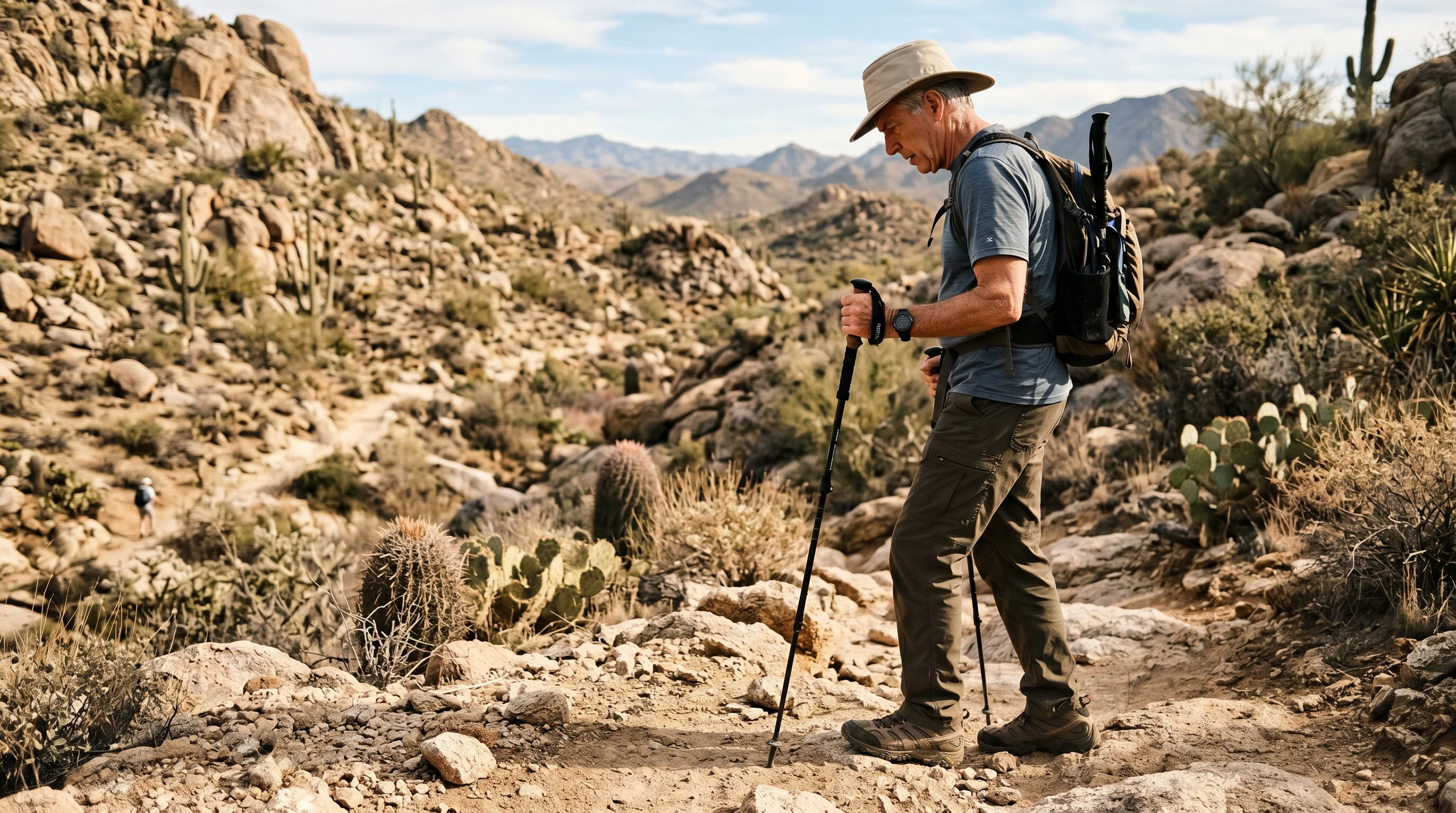
- Use trekking poles on rocky terrain. They reduce knee load, improve balance, and convert two-point contact into four.
- Choose trails matched to your current fitness — not the fitness you had five years ago.
- Hike with a partner or, at minimum, share your route and expected return time with someone who will notice if you don't come back.
- Carry a fully charged phone. Cell coverage is patchy on Prescott trails — the SOS feature on newer iPhones works in some areas; Garmin satellite messengers cover the rest.
- If you've been told you have low bone density, low vitamin D, or are on a medication that increases fall risk — talk through trail choices with us.
The Pre-Hike Checklist
Before any summer Prescott hike, run this list:
- Water: 1 L/hour planned + extra liter per 1,000 ft gain. Add 50%.
- Electrolytes: Required on any hike over 90 minutes.
- Sun protection: Hat with brim, UPF 50+ shirt, sunscreen, sunglasses.
- Footwear: Trail shoes or boots with traction. No sandals on rocky trail.
- Trekking poles if you have any balance concerns.
- Phone charged and reachable.
- Medications with you (especially nitroglycerin, inhalers, EpiPens).
- Plan shared with someone at home.
- Weather check. Storms forecast? Move the hike or shorten it.
- Time check. Off-trail by noon in monsoon season; off-trail before 10 a.m. in extreme heat.
When to Call Us
Heat illness, suspected snake bite, lightning exposure, or any post-hike chest pain or shortness of breath should be evaluated same-day. As a Direct Primary Care member, you can reach me directly — call or text — instead of routing through urgent care or an ER queue.
For chronic conditions that affect hiking safety — hypertension, cardiac history, diabetes, low bone density, balance concerns — schedule a regular visit before summer hits. We have time in our DPC visits to actually look at trail planning and medication timing, which matters more than any pre-hike pep talk.
Call 928-515-2803 or become a member. The trails are worth it. They're also worth respecting.
Frequently Asked Questions
How much water should I bring on a Prescott hike?
Plan for about 1 liter per hour of hiking in heat, plus an extra liter for every 1,000 feet of elevation gain — and add 50% as a safety margin. At 5,400 feet, you lose water through respiration roughly twice as fast as at sea level. A 4-hour summer hike to Granite Mountain (1,663 ft of gain) calls for 5-6 liters of water for the day. Add electrolytes for hikes longer than 90 minutes.
What's the difference between heat exhaustion and heat stroke?
Heat exhaustion involves heavy sweating, weakness, nausea, dizziness, and cool/clammy skin — body temperature usually under 103°F. Treatment: stop, shade, cool with water, sip electrolytes. Heat stroke is a medical emergency: body temperature above 103°F, hot/red skin, confusion, slurred speech, possible loss of consciousness. Call 911 immediately and cool aggressively while waiting. Once mental status changes, the patient has minutes, not hours.
When is rattlesnake season in the Prescott area?
Rattlesnakes are most active April through October, with peak bite activity in August and September. The Arizona Poison Center managed 182 rattlesnake bites statewide in 2024. To reduce risk: stay on trail, wear closed shoes, never reach into rocks or brush, and back away slowly if you see a snake. If bitten, don't apply ice or a tourniquet, keep the limb at heart level, and get to a hospital. The AZ Poison Center hotline is 1-800-222-1222.
How dangerous are monsoon storms for hikers?
Very. Flash floods can develop from rainfall happening 15+ miles upstream — the sun can be shining at your location while a wall of water builds. Just 6 inches of moving water can knock down an adult. Lightning is the second hazard: Arizona ranks among the top 10 states for lightning deaths, and Prescott's exposed granite trails are particularly risky. Hike early during monsoon season (mid-June through September), be off-trail by noon, and use the 30-30 rule for lightning.
Should I worry about altitude effects on a Prescott hike?
Most healthy adults adjust to Prescott's 5,400 ft elevation without trouble, but visitors arriving from sea level should acclimatize for 24-48 hours before strenuous trail effort. People with coronary artery disease, congestive heart failure, severe COPD, or poorly controlled hypertension face higher risk at altitude per a 2021 AHA scientific statement — including arrhythmias and exaggerated blood pressure response. If you have any of these conditions, talk to your doctor before planning challenging hikes.