

When your annual physical results come back with a list of acronyms and numbers, what's actually important? Here's a plain-English guide to CBC, CMP, lipids, A1C, TSH, vitamin D, kidney function, and the 2026 lipid guideline updates that may have changed your targets.
You go in for an annual physical. A few days later your patient portal lights up with a notification: "Lab results available." You log in, see fifteen acronyms and a column of numbers, and most of them have green checkmarks. Some have red flags. None of it is in plain English.
This is one of the most common reasons our DPC members call. So instead of explaining the same thing in fifteen different visits this year, here's a plain-English guide to the labs you're most likely to see — and what's actually meaningful about each number.
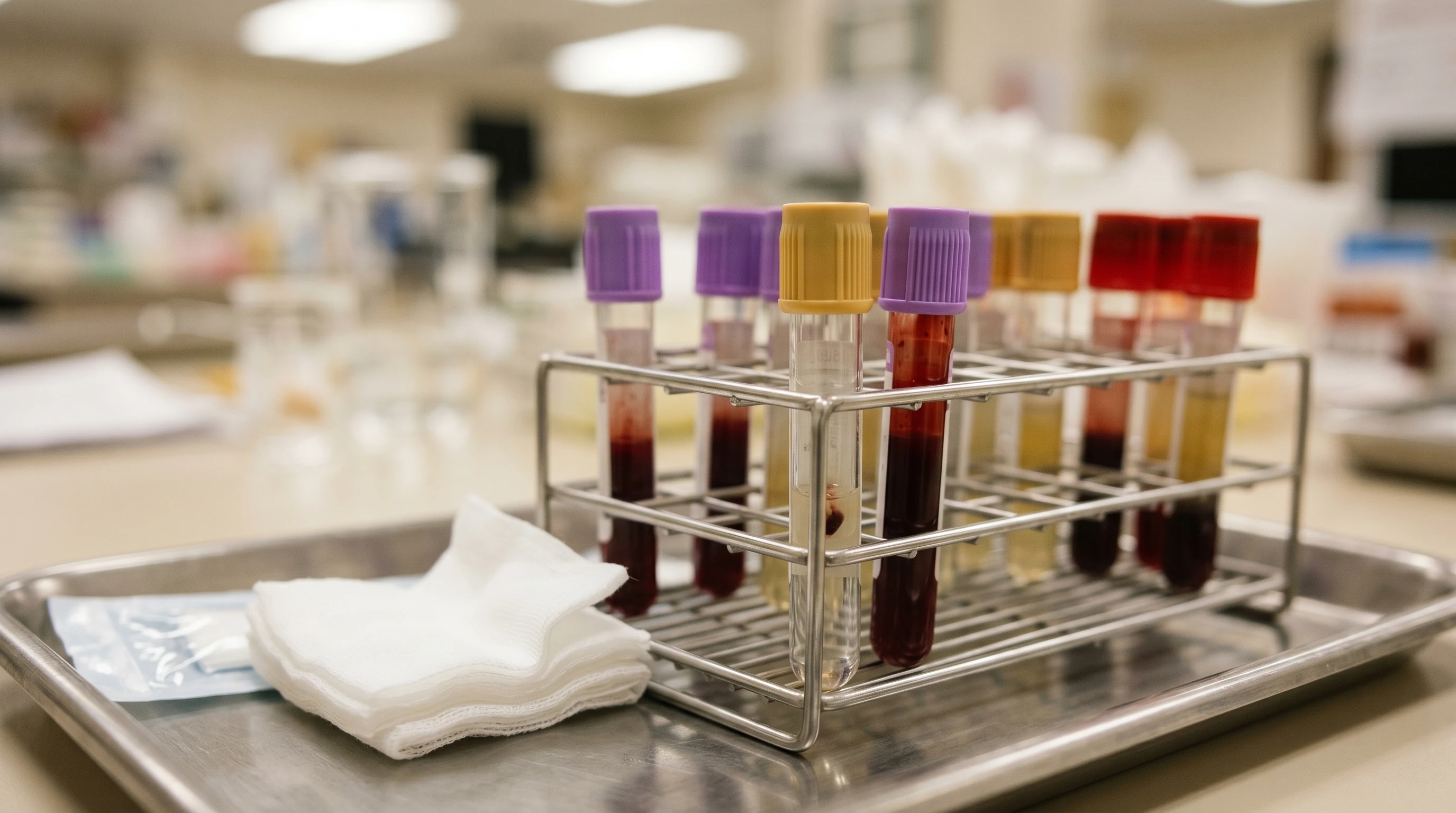
One important note up front: lab values exist in context. The same number can be reassuring for one person and concerning for another. The point of this article isn't to replace a conversation with your doctor. It's to make that conversation more productive.
Key Takeaways
- The 2026 ACC/AHA dyslipidemia guideline restored explicit LDL targets — under 100 mg/dL for borderline/intermediate risk, under 70 mg/dL for high risk — and uses the new PREVENT risk equation (AHA Newsroom, March 2026)
- The Endocrine Society's 2024 vitamin D guideline reversed long-standing advice — they no longer recommend the 30 ng/mL target or routine testing in healthy adults under 75 (Endocrine Society, June 2024)
- 34% of adults 65+ have chronic kidney disease (eGFR <60 for ≥3 months) versus 14% of all adults (CDC, March 2026)
- Lab values vary between labs — a CAP proficiency study found the same A1C sample (true value 6.0%) returned anywhere from 5.6% to 6.4% across 2,600 labs (PMC peer-reviewed study, 2022)
The CBC: Complete Blood Count
The CBC is the basic blood cell census. MedlinePlus from the NIH covers the patient-facing basics. Here's what each number tells us:

- White blood cells (WBC) — Normal range roughly 4,500-11,000/μL. Elevated WBC suggests infection, inflammation, or sometimes stress. Low WBC can mean viral infection, bone marrow issues, or medication effect. A single number is rarely diagnostic — pattern matters more than spot value.
- Red blood cells (RBC) and Hemoglobin. Normal hemoglobin is roughly 13-18 g/dL in men and 12-16 g/dL in women. Low hemoglobin is anemia — common in older adults from iron deficiency, B12 deficiency, kidney disease, or chronic disease. High hemoglobin can occur at altitude (more common in Prescott than at sea level).
- Hematocrit. The percentage of blood that's red blood cells. Tracks closely with hemoglobin.
- Platelets — Normal range 150,000-450,000/μL. These are the clotting cells. Low platelets can mean medication effect, immune issues, or marrow problems. High platelets can indicate inflammation or other concerns.
Reference ranges from NCBI StatPearls.
The CMP: Comprehensive Metabolic Panel
The CMP is fourteen tests bundled together. Per MedlinePlus, the most commonly discussed components include:

Glucose (fasting): 70-99 mg/dL normal
Above 100 mg/dL fasting suggests prediabetes or diabetes — but a single elevated reading could just mean you weren't truly fasting. The A1C (below) is the more durable measure.
Kidney function: BUN, creatinine, and eGFR
Creatinine reference range is roughly 0.6-1.3 mg/dL, but creatinine alone can be misleading because it's affected by muscle mass. The number to watch is eGFR (estimated glomerular filtration rate), which factors in age and other variables. Per National Kidney Foundation staging:
- Stage G1: eGFR ≥ 90 (normal kidney function)
- Stage G2: eGFR 60-89 (mildly decreased)
- Stage G3: eGFR 30-59 (moderate CKD)
- Stage G4: eGFR 15-29 (severe CKD)
- Stage G5: eGFR < 15 (kidney failure)
Chronic kidney disease is defined as eGFR <60 for at least 3 months. Per CDC data, CKD affects 34% of adults 65+ — versus 14% of all adults, and 38% of adults with diabetes. Catching early-stage CKD changes medication dosing, blood pressure targets, and surveillance.
Liver enzymes: ALT and AST
Normal ALT is roughly 7-56 U/L; AST is 10-40 U/L. Mildly elevated values are common (fatty liver, medication effect, recent alcohol use, recent intense exercise). Significantly elevated values warrant investigation.
Electrolytes: sodium, potassium, chloride, CO2
Sodium normal range is 135-145 mmol/L. Both directions can matter — too low (hyponatremia) is common in older adults on certain medications, and too high suggests dehydration. Potassium is critical to watch on diuretics, ACE inhibitors, and ARBs.
The Lipid Panel — and What's New in 2026
The lipid panel measures total cholesterol, LDL ("bad" cholesterol), HDL ("good" cholesterol), and triglycerides. Per MedlinePlus general targets:
- Total cholesterol <200 mg/dL desirable
- LDL <100 mg/dL desirable; <70 mg/dL for high-risk patients
- HDL >40 mg/dL (men) or >50 mg/dL (women)
- Triglycerides <150 mg/dL
The big news in 2026: the ACC/AHA released an updated dyslipidemia guideline in March 2026. The full guideline is published in Circulation. Two major changes:
- Restored explicit LDL targets. The 2018 guideline emphasized statin intensity over specific LDL numbers. The 2026 guideline brings back targets — under 100 mg/dL for borderline/intermediate risk patients, under 70 mg/dL for high-risk patients (those with established cardiovascular disease, diabetes with risk factors, or very high baseline risk).
- The PREVENT risk calculator replaces the older Pooled Cohort Equations for cardiovascular risk estimation. PREVENT incorporates kidney function and metabolic factors, which improves accuracy especially for older adults.
What this means practically: if you were told a few years ago that your LDL was "fine" without a specific target, that conversation is now likely to include a target number again. And that target depends on your overall cardiovascular risk — which the new PREVENT calculator estimates differently than the old one.
A1C: Your Three-Month Blood Sugar Average
Per the 2026 ADA Standards of Care:
- A1C < 5.7%: Normal
- A1C 5.7-6.4%: Prediabetes
- A1C ≥ 6.5%: Diabetes (confirmed with a second test)
A1C measures the percentage of your hemoglobin that's glycated — essentially a 90-day blood sugar average. It's more durable than a single fasting glucose because it can't be "fixed" by skipping breakfast.
One nuance: A1C can be misleading in some conditions. Severe anemia, certain hemoglobin variants, and recent blood transfusions can shift the number. If you have a hematologic condition, your doctor may rely on glucose monitoring or fructosamine instead.
TSH: Your Thyroid Screen
Thyroid-stimulating hormone (TSH) is the first-line thyroid screen. Normal range is roughly 0.4-4.0 mIU/L per most labs. American Thyroid Association data shows the upper limit of normal increases roughly 50% from age 50 to 90 in women — meaning a slightly high TSH in an older patient may not be "abnormal" the way it would be in a 30-year-old.
Per Mayo Clinic Laboratories, TSH outside roughly 0.3-4.2 mIU/L typically triggers a free T4 (and sometimes free T3) for further evaluation.
Vitamin D — A Story That Changed
For more than a decade, the standard advice was: get a 25-hydroxyvitamin D level on essentially everyone, target above 30 ng/mL, and supplement if low. The Endocrine Society's 2024 guideline reversed several pieces of that advice. Their current recommendations:
- No longer endorse universal 30 ng/mL target.
- Recommend against routine 25-OH vitamin D testing in otherwise healthy adults under 75.
- Suggest empirical supplementation — without testing — for adults over 75, pregnant patients, people with prediabetes, and children.
That's a meaningful shift. NHANES data shows 22% of U.S. adults have moderate vitamin D deficiency and 41% are insufficient — but the Endocrine Society's reading of the trial evidence is that broad screening doesn't improve outcomes the way clinicians once believed. We may still test in specific clinical situations (osteoporosis, malabsorption, atypical fractures), but routine annual screening for vitamin D in healthy 60-year-olds is no longer standard.
PSA Testing for Men
Prostate-specific antigen testing remains controversial. Per USPSTF:
- Men 55-69: Grade C — individual decision after discussion of benefits and harms.
- Men 70 and older: Grade D — recommendation against screening.
The benefit of screening is modest — USPSTF analysis estimates approximately 1.3 prostate cancer deaths prevented per 1,000 men screened over 13 years. The harms (overdiagnosis, biopsy complications, treatment effects on continence and erectile function) are real. Per National Cancer Institute guidance, PSA above 4.0 ng/mL is traditionally considered abnormal, with age-adjusted cutoffs (under 3.5 ng/mL for ages 50-59, under 4.5 for 60-69) sometimes applied.
hs-CRP: Inflammation and Cardiovascular Risk
High-sensitivity C-reactive protein measures low-grade systemic inflammation. Per American College of Cardiology guidance:
- hs-CRP < 1 mg/L: Low cardiovascular risk
- hs-CRP 1-3 mg/L: Moderate risk
- hs-CRP ≥ 3 mg/L: High risk
Elevated hs-CRP roughly doubles to triples cardiovascular risk independent of LDL. It's not a screening test for everyone, but it adds information when cardiovascular risk is otherwise unclear.
Why Lab Values Bounce Around
Patients sometimes panic when a value is just outside the reference range. Here's what to know about variability:
A College of American Pathologists proficiency study sent the same blood sample (true A1C of 6.00%) to 2,600 labs using 27 different methods. The results came back ranging from 5.6% to 6.4%. Same blood. Different labs. Three-quarters of a percentage point of variation.
That's not lab incompetence. It's the inherent variability of any measurement — pre-analytical (how the sample was drawn, transported, processed), biological (your body changes hour to hour), and analytical (different methods produce different numbers). For most labs, a single value just outside the reference range — without symptoms or pattern — is rarely actionable. Trends matter more than spot values.
How to Actually Use Your Results
- Read them with the doctor who ordered them. A patient portal alert is information; a conversation is interpretation.
- Track trends. A single A1C of 5.9% means less than three consecutive A1Cs of 5.5, 5.7, 5.9 (a clear upward drift).
- Don't "fail" a single test. Borderline values often regress on retest.
- Bring questions to your visit. The numbers above give you the vocabulary; the conversation gives you the meaning.
The DPC Difference for Lab Review
One of the most concrete advantages of Direct Primary Care is what happens after labs come back. In our model:
- I call you with results. Not a nurse, not a portal message, not silence. A phone call when something matters.
- We review trends — not just the latest number — because I have the time and you're not paying for the visit individually.
- Wholesale lab pricing means we can recheck a borderline value in 6 weeks without it costing you a $200 lab bill.
- If a result needs specialty input, I call the specialist's office myself.
If you'd like that kind of relationship for your annual labs and ongoing care, you can enroll as a member, read more about our DPC model, or call 928-515-2803. Your numbers should mean something. Let's make sure they do.
Frequently Asked Questions
What's a normal LDL cholesterol target in 2026?
It depends on your cardiovascular risk. The March 2026 ACC/AHA dyslipidemia guideline restored explicit LDL targets: under 100 mg/dL for borderline-to-intermediate risk patients, and under 70 mg/dL for high-risk patients (those with established cardiovascular disease, diabetes with additional risk factors, or very high baseline risk). The new guideline uses the PREVENT risk calculator instead of the older Pooled Cohort Equations to assign risk.
Should I get my vitamin D level checked every year?
Probably not, per the 2024 Endocrine Society guideline. They reversed prior recommendations: they no longer endorse a universal 30 ng/mL target and they recommend against routine 25-OH vitamin D testing in healthy adults under 75. They do suggest empirical supplementation (without testing) for adults over 75, pregnant patients, and people with prediabetes. Specific clinical situations like osteoporosis or atypical fractures still warrant testing.
What's a worrying eGFR number?
Per National Kidney Foundation staging: eGFR ≥90 is normal, 60-89 is mildly decreased, 30-59 is moderate chronic kidney disease, 15-29 is severe CKD, and under 15 is kidney failure. Chronic kidney disease is defined as eGFR under 60 for at least 3 months. CDC data shows 34% of adults 65+ have CKD versus 14% of all adults — catching it early changes medication dosing and blood pressure targets.
Why do my lab values change between tests?
All lab measurements have inherent variability. A College of American Pathologists proficiency study sent the same blood sample (true A1C 6.0%) to 2,600 labs and got results ranging from 5.6% to 6.4%. Variation comes from pre-analytical factors (how the sample was drawn, transported, processed), biological variation (your body changes hour to hour), and analytical differences between lab methods. For most labs, a single value just outside the normal range — without symptoms — is rarely actionable. Trends matter more than spot values.
What A1C number means I have diabetes?
Per the 2026 ADA Standards of Care: A1C under 5.7% is normal, 5.7-6.4% is prediabetes, and 6.5% or higher is diabetes (confirmed with a second test). A1C measures the percentage of your hemoglobin that's glycated, reflecting roughly a 90-day blood sugar average. It's more durable than a single fasting glucose because it can't be skewed by skipping breakfast. A1C can be misleading in severe anemia, certain hemoglobin variants, or after recent transfusion.