
Prescott's heat lives in the 90s, not the 100s. Here's how common prescriptions quietly impair your body's ability to shed heat after 65, and the one sign that means call 911.
Every September, someone in my exam room says a version of the same sentence: "It was fine. It never even got to a hundred." That's true. That's also the problem.
Prescott averages 46 days a year at or above 90°F and only 2 days at or above 100°F, based on NOAA 1991-2020 normals compiled by the Arizona State Climate Office. Our heat lives almost entirely in the 90s. That's the band that never triggers a warning, never makes the news, and never feels alarming.
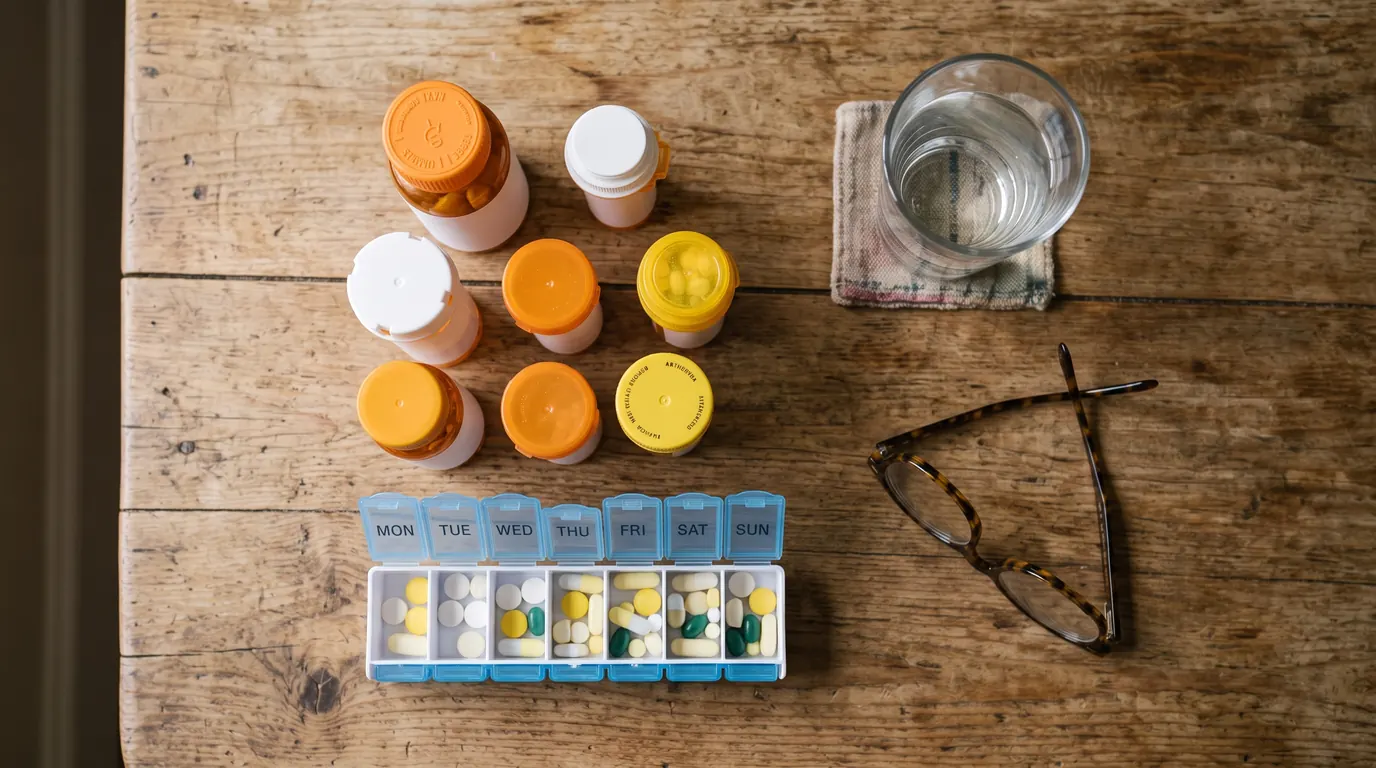
It's also the band where a lot of my patients' prescriptions quietly stop cooperating. Nobody hands you a sheet at the pharmacy counter explaining that your blood pressure pill, your bladder pill, or the Benadryl in your medicine cabinet can blunt your body's ability to shed heat. So this article is about two things: medications and recognition. I've written separately about what and how much to drink in this climate. This piece is about why a 78-year-old on four prescriptions can get into real trouble at 94 degrees while her neighbor mows the lawn.
Key Takeaways
- Prescott averages 46 days a year at or above 90°F and only 2 at or above 100°F, so our dangerous heat almost never comes with an official warning.
- Per 100,000 residents, adults 75 and older had the highest heat death rate of any age group in Maricopa County in 2025 (16.4), even though they were a minority of the raw count.
- During heat waves, Medicare patients 65+ on loop diuretics had a 52% higher risk of heat-related hospitalization (Layton et al., PLoS One 2020).
- Among indoor heat deaths, an air conditioner was present in 94% of homes, and in 72% of those it was not working.
- Confusion or altered mental status in a hot older adult is the 911 trigger, not a thermometer reading. Never stop or change a medication on your own; ask for a summer medication review instead.
Why Does 90 Degrees in Prescott Deserve More Respect Than It Gets?
Because the temperature that hurts people here doesn't look dangerous. Prescott averages 46 days per year at or above 90°F and only 2 at or above 100°F (Arizona State Climate Office, NOAA 1991-2020 normals). That's 1 day in May, 12 in June, 17 in July, 11 in August, and 4 in September.
Now put that next to how heat deaths actually distribute. In Maricopa County in 2025, 47% of heat-related deaths (203 across 69 days) happened on days the National Weather Service rated heat risk only "Moderate." Just 11% occurred on "Extreme" days, according to the Maricopa County 2025 Heat-Related Deaths Report. Moderate days are ordinary days. They are most of our summer.
So if your personal rule is "I'll be careful when they issue a warning," you've adopted a threshold that is structurally incapable of protecting you in this county. The warning is calibrated for a desert valley 100 miles south. Our risk sits below it, all summer, quietly.
Add the dryness. Sweat evaporates off your skin here almost as fast as you produce it, so you rarely feel wet and rarely feel like you're working hard. Thirst also becomes a less reliable alarm as we age; plenty of my older patients simply don't register it. You can be losing ground for hours without a single sensation telling you so.
Who Is Actually Dying From Heat in Arizona?
Older adults, by a wide margin. Arizona residents aged 65 and older accounted for 48.62% of all excessive-natural-heat deaths in the state from 2012 through 2022, the highest share of any age group, and the median age at death from excessive natural heat was 64 (Arizona Department of Health Services Vital Statistics).
County-level numbers can look like they say the opposite, and this is worth understanding. In Maricopa County in 2025, people 65 and older made up 127 of 430 heat deaths, about 29.5% of the count. Read quickly, that makes seniors look like a minority of the problem. But raw counts reflect how many people are in each age group, not how risky the heat is for each person.
Adjust for population and the picture reverses, then climbs steadily with every decade:
| Age group | Heat deaths per 100,000 residents (Maricopa County, 2025) |
|---|---|
| 20-34 | 4.2 |
| 35-49 | 10.3 |
| 50-64 | 13.0 |
| 65-74 | 15.5 |
| 75 and older | 16.4 |
Source: Maricopa County 2025 Heat-Related Deaths Report. Per person, 75 and older is the single highest-risk group in the county.
One more line in that report deserves attention. At 75 and older, the female death rate (16.9 per 100,000) exceeds the male rate (15.7). It's the only age band where that inverts. Almost all heat safety messaging is implicitly written about a male outdoor worker with a water jug. That man is at real risk. He is also not my highest-risk patient. Mine is often an 82-year-old widow, sitting in her own living room, on five medications.
Underlying illness is the common thread. In that same 2025 report, cardiopulmonary disease contributed to 47% of the 430 deaths (201 people), diabetes to 15% (64), and obesity to 8% (35).
What Changes in Your Cooling System After 65?
The two mechanisms that dump heat both slow down. Adults 50 and older store 1.3 to 1.8 times more body heat than adults aged 19 to 30 under the same heat load, according to a physiology review by Millyard et al. in Gerontology & Geriatric Medicine (2020). Same room, same day, more heat retained.
Your body cools itself two ways: it sweats, and it moves warm blood out to the skin so heat can escape. Both get slower with age. In the same review, men over 60 didn't start sweating until a core temperature of 37.0°C, compared with 36.7°C in men under 40. Three-tenths of a degree sounds trivial. It isn't. It's a delay right at the beginning of the response, during the window when the heat load is still small and easy to handle.
The circulation side is the bigger gap. In the same review, older adults increased skin blood flow 2 to 3 times less than younger adults did. That's the pathway a heart has to power, and it's the pathway most affected by medication, which brings us to the part almost nobody explains.
The Medication Problem Almost No One Explains
The evidence here is strong and specific. In a self-controlled case series of 9,721 Medicare beneficiaries aged 65 and older across the summers of 2007 to 2012, heat waves raised the risk of heat-related hospitalization by 52% for people taking loop diuretics, 51% for antipsychotics, and 42% for ACE inhibitors or ARBs (Layton et al., PLoS One 2020).
The same study found a 26% increased risk with anticholinergics (RR 1.26, 95% CI 1.07-1.48). Beta blockers came in at 1.08, which was not statistically significant. Those are ordinary drugs. Most of the people reading this are on at least one of them.
Now the honest complication, because you'll find studies that seem to disagree. A 2024 meta-analysis of 35 studies measured what actually happens to core body temperature in the heat (Meade et al., eClinicalMedicine). Strong anticholinergics raised core temperature by 0.42°C at ambient temperatures of 30°C or higher, with measurably reduced sweating. Non-selective beta blockers raised it 0.11°C. Diuretics and antidepressants showed no measurable change in core temperature at all.
So one study says diuretics are the biggest hospitalization signal in older adults, and the other says diuretics don't raise your temperature. Both are correct, because they're measuring different failure modes.
Anticholinergics and beta blockers impair heat dissipation. They interfere with sweating and with skin blood flow, so their effect shows up on a thermometer in a laboratory. Diuretics, ACE inhibitors, and ARBs work through volume and hemodynamics. They don't heat you up in a controlled two-hour experiment. What they do is thin your circulating volume and blunt the blood pressure response you need to push blood to your skin and stay upright. In a lab, that's nearly invisible. In an 82-year-old, over a real August, on a real thiazide, it produces the largest hospitalization signal of any drug class.
That's the reconciliation, and it matters practically: a normal temperature reading does not mean a diuretic isn't part of the problem.
Which Prescriptions Should Put Heat on Your Radar?
Four mechanisms cover nearly all of them: you can't sweat, you can't move blood to your skin, you can't hold volume, or you can't sense the heat. The Arizona Heat and Medications Task Force (University of Arizona SCORCH Center with ADHS, Pima County Health Department, and the Arizona Poison and Drug Information Center, July 2024) catalogs the common offenders.
| Mechanism | What goes wrong | Common examples |
|---|---|---|
| Can't sweat (anticholinergic) | Blocks the nerve signal that starts sweating, your primary cooling pathway | Oxybutynin (Ditropan XL), diphenhydramine (Benadryl), benztropine (Cogentin), promethazine, doxylamine |
| Can't move blood to the skin | Limits the heart rate and skin blood flow increase needed to carry heat outward | Beta blockers: atenolol, metoprolol, propranolol. Calcium channel blockers: amlodipine, felodipine, nifedipine |
| Can't hold volume | Increases fluid loss or blunts the blood pressure response that keeps circulation stable in heat | Diuretics: furosemide (Lasix), hydrochlorothiazide. ACE inhibitors: lisinopril, enalapril, ramipril. ARBs: losartan (Cozaar), valsartan (Diovan), olmesartan (Benicar) |
| Can't sense the heat | Affects temperature regulation, alertness, or your awareness that something is wrong | SSRIs: sertraline (Zoloft), fluoxetine (Prozac), citalopram (Celexa), escitalopram (Lexapro). Antipsychotics: risperidone, olanzapine, quetiapine. Lithium |
The over-the-counter blind spot
Look at that first row again. Diphenhydramine and doxylamine are in Benadryl, in most "PM" and nighttime sleep formulas, and in a pile of combination cold products. Patients almost never list them when I ask what they take, because they don't think of them as medications. In my experience, this is the single most common surprise in a summer medication review: someone taking a bladder medication for urgency, plus a nightly sleep aid, has stacked two anticholinergics without knowing it.
Read this part twice
Do not stop, skip, reduce, or reschedule any medication on this list on your own. Skipping a diuretic can put fluid back on your lungs within days. Stopping a beta blocker abruptly can trigger dangerous rebound effects on the heart. Stopping an SSRI abruptly causes discontinuation symptoms. Every drug in that table is there because it's doing something important. The goal is not to remove them. The goal is to know which ones change the math in July, and to make any adjustment deliberately, with your physician.
What Should a Summer Medication Review Cover?
It should happen before the first 90-degree week, not during it. In Arizona in 2023, more than 66% of heat-related illness hospital admissions had cardiovascular disease as a comorbidity, and more than 21% of emergency department visits did (Arizona Department of Health Services). The people who get admitted are largely the people already on cardiac medications.
Here's what I want on the table, literally:
- Every bottle. Prescriptions, over-the-counter products, sleep aids, allergy pills, supplements. Bring the actual containers, not a list from memory.
- The mechanism question. "Which of mine affect sweating, blood flow to the skin, my fluid volume, or my alertness?"
- Timing. Ask whether the time of day you take a diuretic or blood pressure medication should shift during hot months.
- Seasonal dosing. Ask directly whether any dose needs adjusting for summer, and who makes that call if you feel off on a hot afternoon.
- Monitoring. If you're on a diuretic, ACE inhibitor, or ARB, ask about checking sodium, potassium, and kidney function, and whether you should track daily weight or home blood pressure through the summer.
- Thresholds. Ask what symptoms mean call the office and what symptoms mean call 911. Write the answers down.
This conversation takes about twenty minutes and it's one of the highest-yield visits of the year for an older adult in this climate. If you'd like to schedule one before the next hot stretch, reach out to our office.
Why Is a Broken Air Conditioner the Deadliest Thing in the House?
Because it's usually present and usually broken. Among 111 indoor heat deaths in Maricopa County in 2025, an air conditioner was present in 94% of homes. Of those units, 72% were not functioning and 23% were not in use. Ninety percent of all indoor heat deaths were people aged 50 and older (Maricopa County 2025 Heat-Related Deaths Report).
Sit with that. These were not people living outside. They had cooling in the house. It failed, or it was off, and the situation went from uncomfortable to fatal inside their own homes.
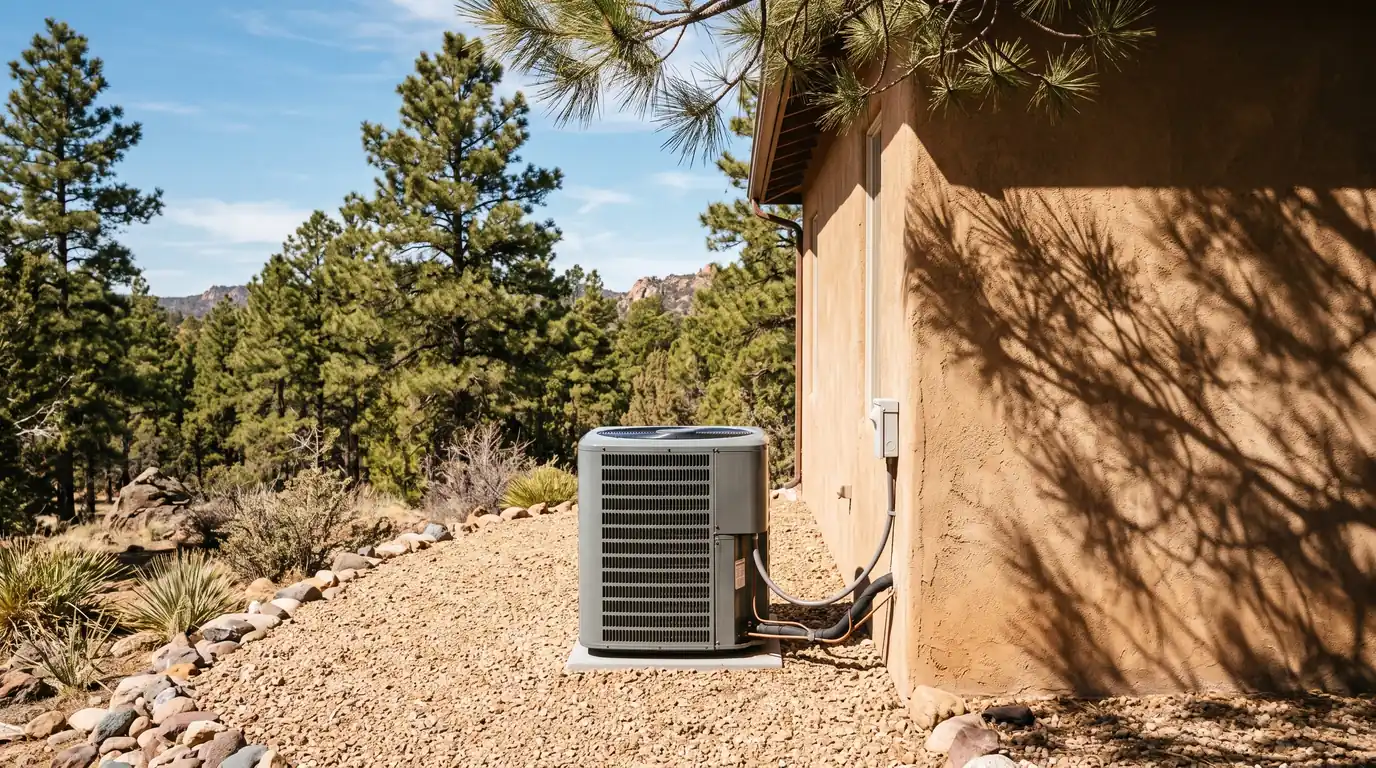
So the most useful thing in this entire article is unglamorous: run your air conditioner in April or May, before you need it. Find out then whether it works. Change the filter. Know the name and number of a company that services it, and roughly how long they take to show up in July when everyone is calling at once.
Then build the backup plan while you're calm. If the unit dies during a hot week, where do you go? A family member's house, a friend, a public cooling center, a hotel for two nights? Decide now and tell someone else the plan. And if you're rationing cooling because of the electric bill, please say so out loud at your next visit. It's a common and completely understandable reason people sit in a hot house, and there are utility assistance programs worth asking about. This is a medical issue, not a budgeting failure.
When Do You Stop Watching and Call 911?
When the person's thinking changes. The CDC Yellow Book 2026 defines heat stroke as a body temperature at or above 41°C (104°F) plus "marked alteration of mental status, including delirium, convulsions, or coma," and instructs rescuers to activate emergency services and not delay cooling while waiting for them.
Here's how I translate that for families, and it's the most usable rule in this article: temperature is secondary. You almost certainly don't have a thermometer at home that reads core temperature accurately, and an oral reading in a dry-mouthed, dehydrated person is unreliable. So don't make the decision on a number.
Confusion, slurred speech, unsteadiness on the feet, agitation, or simply "she's not acting like herself" in a hot older adult is heat stroke until proven otherwise. Call 911. Then start cooling immediately, before the ambulance arrives: get them into shade or air conditioning, remove extra clothing, put cool water on the skin, fan them, and place ice packs at the neck, armpits, and groin. Minutes matter more than any measurement you could take.
Earlier warning signs deserve action too. Heavy fatigue, headache, nausea, muscle cramps, or dizziness when standing up in the heat means stop everything, get cool, get fluids, and call the office. That's the stage where this is still easy to fix.
What I Tell Adult Children Who Live Out of State
Check in more often than feels necessary. Nearly half of indoor heat deaths in Maricopa County in 2025, 48%, were discovered during a welfare check (Maricopa County 2025 Heat-Related Deaths Report). Somebody eventually noticed. The gap between "eventually" and "in time" is where these deaths live.
During hot stretches, call daily at a set time. And don't ask "are you doing okay," because the answer is always yes. Ask something that tests thinking: what did you have for lunch, what's on TV, what day is it. Slow or muddled answers on a hot afternoon are a reason to send someone over, not a reason to hang up and worry.
Three more things. Ask whether the air conditioning is running right now, while you're on the phone. Get the phone number of one neighbor who can knock on the door within ten minutes. And ask for a photo of the medication bottles so you know what your mother actually takes, which matters enormously if paramedics ever ask you.
The Bottom Line
Prescott's 46 annual days above 90°F don't look like a health threat, and that's exactly why they function as one (Arizona State Climate Office). We don't get the warnings that would make people careful, and after 65 the body needs less provocation to get into trouble.
Three actions, in order. Get your air conditioner tested before summer, because a broken unit in an occupied home is the pattern behind most indoor heat deaths. Book a medication review and bring every bottle, including the ones from the grocery store aisle. And teach whoever checks on you that confusion in the heat means 911, not "let's see how she does."
Do not change a single dose on your own. Bring this list to your physician and make the decision together, before it's 96 degrees and you're deciding in the moment.
Frequently Asked Questions
Can my blood pressure medication really make hot weather dangerous?
It can raise your risk. In Medicare patients 65 and older, heat waves increased heat-related hospitalization risk by 42% for those on ACE inhibitors or ARBs and 52% for loop diuretics (Layton et al., PLoS One 2020). That's a reason for a medication review, never a reason to stop taking them.
Should I skip my water pill on a hot day?
No. Skipping a diuretic on your own can put fluid back on your lungs within days and land you in the hospital for a different reason. Ask your physician whether timing or dose should change for summer, and whether you should track daily weight or blood pressure at home.
Is Benadryl a problem during Arizona summers?
Diphenhydramine is anticholinergic, meaning it blocks the signal that starts sweating. A 2024 meta-analysis found strong anticholinergics raised core temperature 0.42°C at ambient temperatures above 30°C with reduced sweating (Meade et al., eClinicalMedicine). Check nighttime sleep aids and cold products too, since many contain it.
How hot does it need to be in Prescott before I should be careful?
Lower than you'd think. In Maricopa County in 2025, 47% of heat deaths occurred on days rated only "Moderate" heat risk, versus 11% on "Extreme" days. Prescott averages 46 days at or above 90°F and just 2 above 100°F, so waiting for a warning means waiting for something that rarely comes.
What is the difference between heat exhaustion and heat stroke?
Mental status. Heat exhaustion brings fatigue, headache, nausea, cramps, and dizziness, and improves with cooling and rest. Heat stroke adds marked alteration of mental status: delirium, convulsions, or coma (CDC Yellow Book 2026). Confusion in a hot older adult means call 911 and start cooling immediately.
Why are women over 75 at higher risk than men that age?
In Maricopa County's 2025 data, the female death rate at 75 and older was 16.9 per 100,000 versus 15.7 for men, the only age band where that inverts. Most heat safety messaging pictures a male outdoor worker, so older women living alone indoors are frequently overlooked.